

HCPCS code E0198: Water pressure pad billing guide
HCPCS code E0198 is a water pad for a standard mattress HCPCS code E0198 is the ...

Last Updated: Oct 13, 2026
A4630 is the HCPCS Level II code for replacement batteries, medically necessary, transcutaneous electrical stimulator, owned by patient.
Whether you can bill A4630 separately depends on the payer. Medicare's DME MAC treats TENS batteries as bundled rather than separately payable, and several commercial and federal programs exclude the code outright.
Let Pabau's smart automation suggest the right codes, reduce claim denials, and keep your practice compliant—effortlessly.
Automate repetitive tasks and focus on what matters most—your patients.
Reduce coding errors and ensure compliance with the latest regulations.
Clean claims, fewer denials, and faster reimbursements.
Powerful insights and reporting to help your practice thrive.
HIPAA compliant SOC 2 certified GDPR-compliant Trusted by 4,000+ clinics worldwide

HCPCS code A4630 covers replacement batteries, medically necessary, for a transcutaneous electrical nerve stimulator (TENS) owned by the patient, not rented.
Patient ownership of the TENS unit is a hard billing requirement: if the device is rented or loaner, A4630 is not billable.
Medicare’s DME MAC never pays A4630 as a separate line item; TENS batteries are billed through A4595 or the E0720/E0730 equipment allowance instead. FECA/DOL and BCBS Illinois apply the same exclusion.
Practice management software like Pabau helps practices submit, track, and reconcile insurance claims, keeping documentation organized for procedure codes such as A4630.
HCPCS code A4630 describes “replacement batteries, medically necessary, transcutaneous electrical nerve stimulator, owned by patient.” It sits within the HCPCS Level II A4630-A4640 Replacement Parts code range, which covers durable medical equipment supplies maintained by the Centers for Medicare and Medicaid Services (CMS). Practice management software like Pabau helps practices track claims and documentation across code families like this one. Denial codes in medical billing group the reasons a payer refuses, and the group decides the fix. Self-pay patients submitting to their own insurer need the code and the charge on one patient receipt template.
The TENS unit delivers low-voltage electrical impulses through electrodes placed on the skin to manage chronic or acute pain. When the device battery depletes, the patient cannot continue therapy without a replacement. A4630 captures the cost of that replacement battery as a DME supply for a patient-owned unit.
Suppliers sometimes search for the “A4630 CPT code,” but A4630 is a HCPCS Level II code, not a CPT code. CPT codes are maintained by the American Medical Association, while HCPCS Level II codes like A4630 are maintained by CMS.
A4630 applies to both rechargeable and non-rechargeable battery types used in patient-owned TENS devices. According to guidance from AAPC Codify, the code falls under DME MAC (Durable Medical Equipment Medicare Administrative Contractor) jurisdiction for Medicare billing, meaning DME MACs rather than Part B MACs process and adjudicate A4630 claims.
CMS Transmittal R4200CP confirms this jurisdiction assignment in its 2019 Attachment A listing.
Medicare Part B covers TENS unit supplies under the DMEPOS (Durable Medical Equipment, Prosthetics, Orthotics, and Supplies) benefit. The DME MAC does not accept A4630 as a separate line item under any documentation scenario, no matter how complete the paperwork is.
TENS batteries are billed through the A4595 supply allowance or the E0720/E0730 equipment allowance instead, as the A4595 CPT code and when A4630 is bundled section explains. The criteria below describe that underlying supply or equipment entitlement, not A4630 payability itself.
TENS unit insurance coverage also varies widely across commercial payers. Most payers require a physician order, a documented trial period, and evidence of medical necessity tied to a qualifying diagnosis.
Physical therapy billing follows the same TENS supply logic; see our guide to physical therapy billing.
The same ownership test runs through other DME supply codes. A4612 covers replacement battery cables for a patient-owned ventilator, and a rented ventilator already includes those cables in its monthly allowance.
A4630 is not separately payable for any payer that follows Medicare’s DME MAC rules. The DME MAC bundles TENS batteries into the A4595 supply allowance, or the E0720/E0730 equipment allowance, and does not accept A4630 as its own claim line. Several other payers apply the same exclusion outright, rather than carving it out of an otherwise payable code.
FECA/Department of Labor: The U.S. Department of Labor’s Office of Workers’ Compensation Programs (OWCP) mirrors the Medicare DME MAC stance and no longer covers A4630 as a separately billable service under the Federal Employees’ Compensation Act program. The DOL billing guidance for TENS unit supplies lists A4630 among the excluded codes, and submitting it to FECA results in denial.
Blue Cross Blue Shield Illinois: BCBS Illinois published a provider communication in August 2024 stating that A4630 is not valid for claim submission under the TENS DME benefit, matching the Medicare DME MAC position. Suppliers serving BCBS IL members should not submit A4630 and should review BCBS IL’s provider bulletins for current billing guidance on TENS supplies.
Before submitting any A4630 claim, check the patient’s payer-specific LCD and Local Coverage Article (LCA). DME MAC Jurisdictions A, B, C, and D each maintain separate LCDs that may differ on qualifying diagnoses and documentation thresholds for TENS supplies. Confirm jurisdiction by the patient’s state of residence, not the billing address.
With built-in inventory tracking, every dressing or catheter billed under these codes matches recorded stock movement.
Incomplete documentation is the most common reason TENS supply claims are denied or flagged in a post-payment audit. For Medicare, the Certificate of Medical Necessity (CMN) was eliminated for dates of service on or after January 1, 2023, so a Standard Written Order (SWO) from the treating practitioner now carries the order requirement.
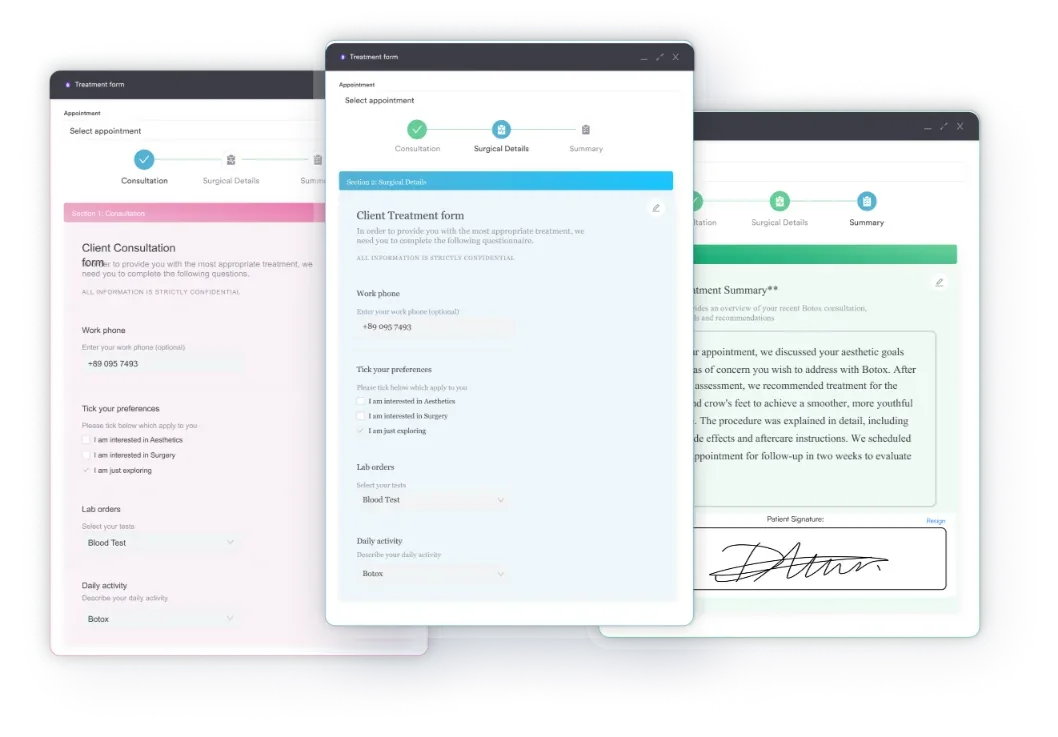
The HIPAA security rule requirements for patient record retention apply alongside DME MAC documentation standards. Using digital intake forms that capture ownership status and physician orders at the point of care keeps documentation complete at claim time.
Maintain all documentation for a minimum of seven years from the date of service or the date of last billing, whichever is later. This aligns with HIPAA-compliant billing workflows and DME MAC audit preparation standards.

Pabau keeps physician orders, ownership records, and delivery confirmations organized in one place, so your team is audit-ready before claims go out the door.

Accurate claim submission for HCPCS code A4630 requires matching the billing unit to the actual quantity supplied and selecting modifiers that reflect the patient’s coverage status. The CMS Physician Fee Schedule lookup provides current reimbursement rates by jurisdiction; always verify rates for the current fiscal year before citing figures to patients or payers.
For a comparable modifier walkthrough on another DME code.
A4630 does not carry modifiers on Medicare DME MAC claims, because it is not submitted as a separate line item there. KX, GA, and GZ attach instead to the TENS device codes E0720, E0730, and E0731, while NU and RR mark whether that equipment is purchased or rented.
A4595, the bundled supply code, is billed on its own without these device modifiers.
Always verify modifier requirements with the billing state’s DME MAC before claim submission. Applying these modifiers to A4630 instead of the device code is a common cause of denials and can trigger a refund request if identified in a post-payment review.
For payers that accept A4630 directly, bill per battery supplied. If two batteries are provided, report a quantity of two units on the claim line. Payers may have monthly quantity limits on replacement batteries; exceeding those limits without medical necessity documentation will result in a denial.
This per-battery approach does not apply to Medicare DME MAC claims, where A4630 is never billed on its own line. Medicare’s monthly A4595 all-inclusive supply allowance covers the battery instead, as described in the A4595 CPT code and when A4630 is bundled section.
The PGM Billing HCPCS lookup tool provides a quick reference for current code properties, including any published medically unlikely edit (MUE) values.
Run an advance beneficiary notice (ABN) check before supplying A4630 batteries to Medicare patients with incomplete documentation. If the LCD criteria cannot be confirmed at the time of supply, issue an ABN, obtain the patient’s signature, and document the discussion. This protects the supplier from full financial liability if Medicare denies the claim.
TENS supply billing involves several codes that are frequently confused or incorrectly bundled. Understanding which code covers each supply type prevents both underbilling and duplicate billing errors. Practices that also bill other procedure types can reference coaching CPT codes or other procedure-specific reference guides for similar structured billing breakdowns.
For practices managing multi-specialty billing. For other DME and diagnosis codes commonly billed alongside TENS therapy, see our guides to A5120.
Suppliers often search for a “TENS unit CPT code,” but the TENS device is billed with HCPCS Level II equipment codes rather than CPT codes. The two-lead unit is E0720 and the four-lead unit is E0730.
Whether it is looked up as the E0720 CPT code or the E0730 CPT code, the purchase allowance is all-inclusive: it covers the lead wires plus about one month of supplies, including electrodes, conductive gel if needed, and batteries. During a rental, those same supplies are included in the monthly rental allowance, with no separate payment for batteries.
E0731 covers a form-fitting conductive garment used with a TENS or NMES device, and each E0731 claim must record the brand and model of the garment. The KX, GA, and GZ modifiers attach to these device codes (E0720, E0730, and E0731) to signal whether the coverage criteria in the payer’s Local Coverage Determination have been met.
The A4595 CPT code is the all-inclusive TENS supply allowance, and it is the code Medicare expects for consumable TENS supplies. A4595 covers electrodes of any type, conductive paste or gel, tape and adhesive, skin preparation materials, batteries (9-volt or AA, single-use or rechargeable), and a battery charger when rechargeable batteries are used.
This is why A4630 is not accepted by every payer. Under Medicare’s DME MAC coding rules, per CMS Local Coverage Article A52520, A4556, A4558, and A4630 are not valid for separate claim submission, and A4595 is used instead.
For those payers, the replacement battery is never billed on its own line. Confirm whether the patient’s plan pays supplies through A4595 or accepts A4630 directly before you submit, because billing the wrong code triggers a denial.
The A4556 CPT code and A4558 cover itemized TENS supplies, electrodes and conductive gel, while A4630 applies only to the replacement battery for a patient-owned TENS unit. Itemized supplies are not paid separately under some payer policies; Medicare’s DME MAC bundles all three into A4595 instead.
BCBS Illinois separately lists A4556, A4558, and A4630 as excluded from the TENS DME benefit, so confirm the patient’s payer policy before submitting any TENS supply claim.
For payers that accept itemized TENS supply billing, maintaining separate claim lines for each supply type with its own supporting documentation is the safest approach. Bundling A4630 with A4556 or A4558 on the same claim line can trigger a global supply edit and result in denial of all three codes.
Review the practice compliance workflows relevant to DME supply billing for a broader framework on managing supply code accuracy. The IVF CPT code documentation framework offers a parallel example of how to structure itemized supply billing records across related code sets.
HCPCS code A4630 is straightforward in concept but frequently denied in practice, almost always because ownership documentation is incomplete or the payer bundles the battery into another code. Medicare’s DME MAC never pays A4630 separately, FECA and BCBS Illinois apply the same exclusion, and modifier selection must reflect the device code actually being billed.
Pabau’s practice management platform helps practices build structured documentation workflows, track payer-specific billing rules, and keep records organized before claims go out. To see how Pabau supports claims documentation, book a demo with the team.

Billing a dobutamine infusion claim? Dobutamine injection billing guide explains J1250 unit rules, ASP-based reimbursement, and the JA, JW, and JZ modifiers.
Billing an inclisiran injection next? Inclisiran (Leqvio) billing guide covers J1306 unit counts, prior authorization, and the JZ modifier for a 284 mg dose.
Coding an ertapenem injection claim? Ertapenem Sodium injection billing guide explains J1335 unit counts and the documentation that keeps ertapenem claims from being denied.
HCPCS code A4630 is used to bill for replacement batteries, medically necessary, for a transcutaneous electrical nerve stimulator (TENS) that is owned by the patient. It covers both rechargeable and non-rechargeable battery types and is classified as a DMEPOS supply under HCPCS Level II. The key requirement is that the patient must own the TENS unit outright; the code is not billable for rented devices.
A4630 itself is not separately payable by Medicare’s DME MAC under any documentation scenario. Medicare covers the underlying TENS battery through the A4595 all-inclusive supply allowance, or the E0720/E0730 equipment allowance, when the unit is patient-owned, a physician has ordered TENS therapy for a qualifying diagnosis, and the applicable LCD criteria are met.
For payers that accept A4630 directly, which does not include Medicare’s DME MAC, bill a quantity equal to the number of batteries supplied and follow that payer’s own modifier rules. For Medicare DME MAC claims, bill the A4595 supply allowance or the E0720/E0730 equipment code instead, with KX, GA, or GZ attached to the device code as required. Verify current reimbursement rates via the CMS Physician Fee Schedule lookup before submitting.
A4630 covers replacement batteries for a patient-owned TENS unit. A4556 covers electrodes (e.g., apnea monitor electrodes), billed per pair. They are separate supply types and must be billed on separate claim lines with distinct documentation for each. Some payers, including BCBS Illinois, exclude both codes from the TENS DME benefit entirely, so payer policy must be confirmed before billing either code.
A4630 itself does not carry modifiers on Medicare DME MAC claims, because it is not billed as a separate line there. KX, GA, and GZ attach to the TENS device codes (E0720, E0730, E0731) instead, while NU and RR indicate whether that equipment is purchased or rented. For payers that accept A4630 directly, follow that payer’s own modifier guidance.
Medicare covers TENS for acute post-surgical pain when a physician orders it and documentation supports medical necessity, billed under E0720 or E0730 with supplies bundled into the equipment allowance or A4595. For chronic pain, coverage is far more limited: chronic low back pain is nationally non-covered under CMS NCD 160.27, since the coverage-with-evidence-development trial period ended in 2015. TENS unit insurance coverage for other chronic pain conditions still depends on the patient’s DME MAC jurisdiction and LCD criteria.



