

HCPCS code E0198: Water pressure pad billing guide
HCPCS code E0198 is a water pad for a standard mattress HCPCS code E0198 is the ...

Last Updated: Oct 13, 2026
A4626 is the HCPCS Level II code for tracheostomy cleaning brush, each.
The code sits inside a tight cluster of similarly numbered tracheostomy and respiratory supply codes, and getting it right matters because Medicare only pays when the code, the physician order, and the supporting diagnosis all match.
Most denials on this code trace back to documentation that doesn't match the coverage criteria below, so getting the definition and the neighboring codes straight is the first line of defense.
This is an active code with no termination date on record for 2026. DME suppliers and home health agencies use it when furnishing tracheostomy cleaning brushes to Medicare beneficiaries who need ongoing airway maintenance. The billing unit is per each item supplied.
The CMS maintains the HCPCS Level II code set. A-series codes cover medical and surgical supplies, including tracheostomy accessories. HCPCS Code A4626 sits specifically within the tracheostomy supply subset alongside codes A4625, A4628, and A4629.
Code A4627 falls numerically between A4626 and A4628, but it describes an MDI/asthma-inhaler spacer device and is governed by separate respiratory/DME coverage rules, not the tracheostomy policy article below.
Let Pabau's smart automation suggest the right codes, reduce claim denials, and keep your practice compliant—effortlessly.
Automate repetitive tasks and focus on what matters most—your patients.
Reduce coding errors and ensure compliance with the latest regulations.
Clean claims, fewer denials, and faster reimbursements.
Powerful insights and reporting to help your practice thrive.
HIPAA compliant SOC 2 certified GDPR-compliant Trusted by 4,000+ clinics worldwide

HCPCS Code A4626 describes a tracheostomy cleaning brush, each unit, billed as a HCPCS Level II supply code under the A-codes series
Medicare Part B covers A4626 as a DME supply when medical necessity is documented per CMS Policy Article A52492
Billing requires a physician order, proof of medical necessity, and a supporting diagnosis confirming the patient has a tracheostomy
Pabau’s claims management software helps DME suppliers and home health agencies submit clean A4626 claims with accurate documentation workflows
Coverage for A4626 is not automatic. Medicare Part B pays for tracheostomy cleaning brushes as DME supplies when the claim meets the medical necessity criteria set out in CMS Policy Article A52492.
That policy article governs the tracheostomy care supply codes A4625, A4626, A4628, and A4629, plus the A7501-A7527 series. It does not cover A4627, which is an MDI spacer device billed under separate respiratory/DME coverage rules.
Patient eligibility hinges on two conditions: the beneficiary must have a tracheostomy, and the supplies must be ordered by a treating physician. Coverage is limited to supplies considered medically necessary for the patient’s care at home or in a setting eligible for the Part B DME benefit.
Inadequate documentation is the leading cause of A4626 claim denials. Every claim needs a clear paper trail connecting the patient’s diagnosis to the supply being billed.
Physician orders for A4626 often originate in primary care rather than a specialist visit.
Keeping digital patient documentation current reduces the risk of audit exposure. A physician order dated well after the supply date is a common flag for MAC review. Always retain supporting documentation for the period required under your MAC’s record-retention policy.
Audit your A4626 claims quarterly. Pull all claims submitted in the prior 90 days and verify each has a matching physician order on file, a confirmed delivery record, and a supporting ICD-10 diagnosis. Claims missing any one of these three elements are denial candidates regardless of how clean the HCPCS code is.
Medicare reimburses HCPCS Code A4626 under the DMEPOS fee schedule. The payment amount is set by CMS and updated annually. Because fee schedule amounts change each calendar year and vary by MAC jurisdiction, billing staff should always verify the current rate directly through the fee schedule lookup tool rather than relying on figures from prior years.
Each Medicare Administrative Contractor (MAC) applies geographic pricing adjustments that can push the allowed amount above or below the national base rate. Suppliers operating across multiple states or MAC jurisdictions should pull fee schedule amounts by location, not by a single national figure.
Other DME items reimbursed under this same fee schedule structure.
DME suppliers billing Medicare Part B for A4626 don’t use a bill type code at all. Bill type (type of bill) is a UB-04/837I institutional-claim concept used by facilities, such as hospitals, home health agencies, hospices, and skilled nursing facilities, not by independent DME suppliers.
DME suppliers submit on the CMS-1500 form (the 837P professional claim electronically), which has no bill-type field. Home health agencies and hospital outpatient departments that supply tracheostomy brushes do use bill type codes, and should verify the applicable one with their MAC before submission.
Revenue codes are also a UB-04/837I concept, so they apply to home health and hospital outpatient claims, not to a DME supplier’s CMS-1500/837P claim.
Home health agencies and hospital outpatient departments should review their MAC’s policy article for tracheostomy care supplies to confirm the applicable revenue code before submission. A mismatched bill type and revenue code combination is a common claim edit trigger for those claim types.

Pabau helps DME suppliers and home health practices track supply orders, maintain physician documentation, and submit clean HCPCS claims the first time. See how it works for your billing workflow.

Billing staff who work with HCPCS Code A4626 regularly need to know where it sits among the related tracheostomy codes: A4625, A4628, and A4629.
Code A4627 falls between A4626 and A4628 numerically, but it’s an MDI spacer device covered under separate respiratory/DME rules, not tracheostomy policy. It’s worth flagging separately, since the numbering makes it easy to code by mistake. Selecting the wrong code among the true tracheostomy set is a common source of denials and audit flags, particularly between A4625 and A4626. Coding sits in the middle of the revenue cycle, between registration and payment posting.
These two codes get mixed up more than any others in the series. A4625 is for the complete tracheostomy care kit supplied to a patient who has a new tracheostomy. A4626 is for the individual cleaning brush, billed each time a replacement brush is supplied to a patient with an established tracheostomy.
In practice: a patient who just had a tracheostomy placed gets A4625. When that same patient needs a new cleaning brush three months later, that’s A4626.
Billing A4625 for ongoing brush replacement, or A4626 when the full kit is being supplied to a new tracheostomy patient, creates a mismatch between the HCPCS code and the clinical documentation. That mismatch is a denial waiting to happen.
The A4629 code covers the established tracheostomy care kit (the complete set of supplies, not just the brush) for patients who have had their tracheostomy long-term.
Keeping A4625, A4626, and A4629 straight is essential for clean claims in this supply category.
CMS Policy Article A52492 sets the utilization framework for tracheostomy care supply codes. Billing staff should treat this policy as the authoritative reference for quantity limits and frequency rules, because the AAPC HCPCS reference and third-party lookup tools often don’t reflect MAC-specific utilization guidance.
Practices using practice management software can build supply billing workflows that flag quantity limits before a claim goes out. That kind of pre-submission edit catches the most common utilization errors without requiring manual review of every claim.
The same discipline applies to other DME supply codes billing staff handle alongside A4626. Each has its own coverage article, but the underlying rule is the same: match the code, the order, and the diagnosis before the claim goes out.
Check NCCI edits every time you bill A4626 alongside another tracheostomy code (A4625, A4628, A4629) or a code from the A7501-A7527 series in the same claim. The combination edit table changes quarterly and a previously clean code pair can become an edit conflict in a new quarter. Build a quarterly NCCI review into your billing calendar.
An inventory management tool flags when supply usage and supply billing drift apart.
DME suppliers and home health agencies billing HCPCS Code A4626 deal with a documentation burden that scales with patient volume. Manual processes, paper physician orders, and spreadsheet-based supply tracking create mismatches between the order, the supply, and the claim that don’t survive a MAC audit.
Good EHR integration connects the physician order, the supply record, and the claim in one workflow, so nothing is left disconnected when a MAC reviews the file.
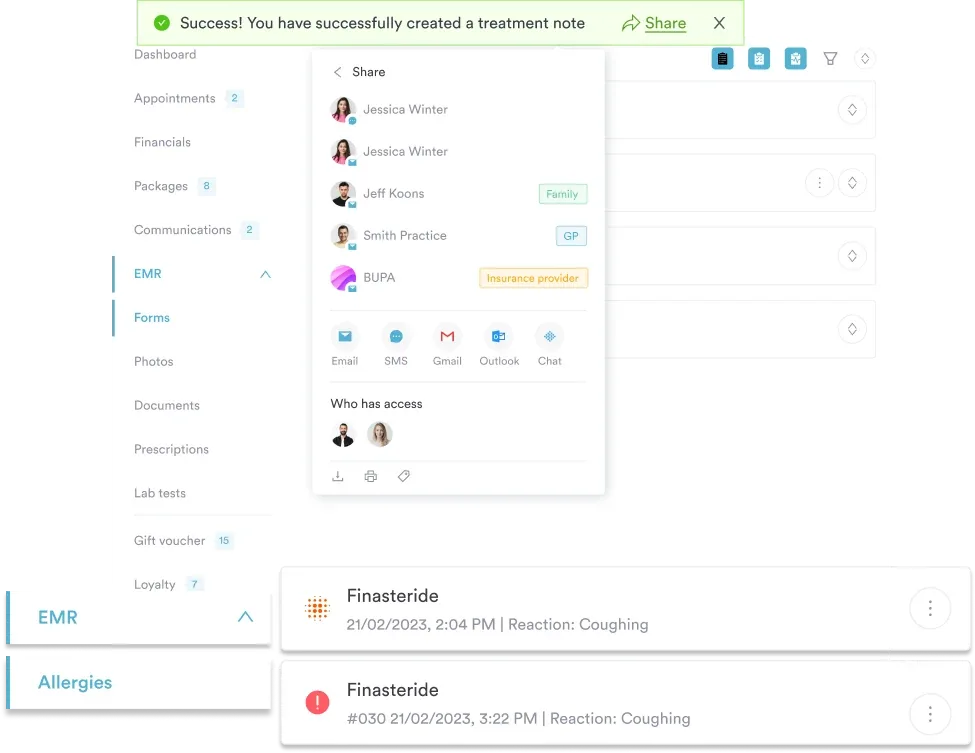
Practice management software like Pabau supports HCPCS billing workflows through centralized patient record management that keeps physician orders, diagnosis codes, and supply delivery records in one place. When a coder goes to bill A4626, the supporting documentation is already attached to the patient record, reducing the time spent chasing records before claim submission.
Beyond records, automated workflows help practices track supply reorder cycles.
For patients receiving tracheostomy brushes on an ongoing basis, a system that flags when a patient is due for a supply replenishment prevents both under-supply and over-billing, two common compliance risks for DME suppliers.
The PGM Billing lookup tool lets billing staff quickly verify A4626 descriptor and status before submission. Using verified external tools alongside internal documentation systems is a practical double-check before claims go out. For HIPAA compliance considerations relevant to maintaining these records.
Clean A4626 claims start with matching the right code to the right supply, backing it with a physician order, and keeping the quantity within CMS policy limits. The distinction between A4625, A4626, and A4629 is where most billing errors occur, and fixing that confusion upstream, before the claim goes out, is far cheaper than working denials.
Pabau’s claims management software helps DME suppliers and home health agencies maintain the documentation audit trail that HCPCS supply codes require, from physician order to delivery confirmation to claim submission. To see how it fits your billing workflow, book a demo with the team.

Billing an antihistamine injection claim? Diphenhydramine HCl injection billing guide covers HCPCS code J1200 for diphenhydramine administered for allergic reactions, nausea, or pre-procedure sedation.
HCPCS Code A4626 is a tracheostomy cleaning brush, each unit. It is a HCPCS Level II supply code in the A4620-A4629 series, used by DME suppliers and home health agencies billing Medicare Part B for cleaning brushes supplied to patients with an established tracheostomy.
Yes, A4626 is covered under Medicare Part B as a DME supply when medical necessity criteria are met. Coverage is governed by CMS Policy Article A52492, which requires a physician order and documentation confirming the patient has a tracheostomy and needs the cleaning brush for ongoing airway care.
The fee schedule amount for A4626 varies by MAC jurisdiction and is updated annually by CMS. Always verify the current reimbursement rate through the CMS DMEPOS fee schedule lookup tool rather than using a figure from a prior year, as amounts change with each annual update.
Billing A4626 requires a written physician order, clinical notes confirming the patient has a tracheostomy and medical necessity for the cleaning brush, a supporting ICD-10-CM diagnosis code (such as Z93.0 for tracheostomy status), a proof of delivery record, and the date the supply was furnished to the beneficiary.
A4625 covers the complete tracheostomy care kit for a patient with a new tracheostomy. A4626 covers only the individual cleaning brush, each unit, for patients with an established tracheostomy needing brush replacement. Billing A4625 when only a replacement brush is being supplied, or vice versa, creates a code-to-documentation mismatch and typically results in a denial.
CMS Policy Article A52492 governs the tracheostomy care supply codes A4625, A4626, A4628, A4629, and the A7501-A7527 series. A4627 is not included — it’s an MDI/asthma-inhaler spacer device covered under separate respiratory/DME coverage rules. A52492 sets coverage indications, documentation requirements, and utilization guidelines for the tracheostomy codes. Billing staff should reference this policy article directly for authoritative guidance on medical necessity criteria and quantity limits.
Home health agencies may bill A4626 in certain circumstances, but consolidated billing rules can restrict separate billing for DME supplies during a home health episode. Verify applicable bill type codes and consolidated billing requirements with your MAC before submitting A4626 claims as a home health agency.



