HCPCS Code Q4175: Billing, coverage, and documentation guide
HCPCS Code Q4175: Code Description and Product Identity HCPCS Code Q4175 is the ...

Last Updated: Nov 20, 2026
V1930 is the CCSD code for an alveolar bone graft on one side of the jaw, used by UK private medical insurers. It covers packing bone, usually taken from the hip, into a defect in the tooth-bearing ridge.
The code sits in sub-chapter 6.1.0 Face and Jaws of the CCSD schedule. A graft to both sides in the same operation is billed as V1931. National Friendly's fee schedule places V1930 in its intermediate complexity band, and other insurers band it their own way.
Let Pabau's smart automation suggest the right codes, reduce claim denials, and keep your practice compliant—effortlessly.
Automate repetitive tasks and focus on what matters most—your patients.
Reduce coding errors and ensure compliance with the latest regulations.
Clean claims, fewer denials, and faster reimbursements.
Powerful insights and reporting to help your practice thrive.
HIPAA compliant SOC 2 certified GDPR-compliant Trusted by 4,000+ clinics worldwide

CCSD code V1930 covers an alveolar bone graft on one side of the jaw. A graft to both sides in the same operation is billed as V1931.
Secondary grafting of a cleft in the gum, usually between ages 8 and 12, is the classic indication. Ridge deficiency and post-traumatic defects also qualify.
CCSD is the procedure schedule of the UK private sector, so V1930 claims go to insurers such as Bupa, AXA Health, Aviva and Vitality.
Most insurers expect pre-authorization for planned surgery, and many policies exclude pre-existing conditions or dental work. Check cover before you book the operation.
The side named in the operation note, the CCSD code and the ICD-10 diagnosis must agree, or the insurer is likely to query the claim.
CCSD code V1930 is the code UK private insurers use for an alveolar bone graft on one side of the jaw. National Friendly’s CCSD-based fee schedule lists it as “Alveolar bone graft – unilateral” and places it in its own Inter (intermediate) band.
The surgeon takes bone from a donor site, most often the hip, and packs it into a defect in the alveolar ridge. That ridge is the part of the jaw that holds the teeth. “Unilateral” means the graft goes into one side only, in the upper or the lower jaw.
CCSD is the schedule of procedure and diagnostic-test codes used across the UK private healthcare sector. It keeps separate unilateral and bilateral graft codes, so the number of sides grafted decides the claim.
Each insurer sets its own fee against the CCSD codes, so check the edition your payer works from. Our index of CCSD codes lists the other procedure codes we cover.
Secondary alveolar bone grafting for a cleft in the gum is the classic indication. The NHS cleft treatment timeline places it at 8 to 12 years of age. It follows the earlier lip and palate repairs and is timed around the eruption of the permanent canine next to the cleft.
Specialist NHS cleft teams deliver most cleft care in the UK. Private V1930 claims also come from three other indications:
V1930 doesn’t cover the implant itself, which is billed as F1151 for stage I placement. A larger rebuild of the jaw with non-vascularised bone is billed as V1910.
The surgical sequence follows the same pattern across indications:
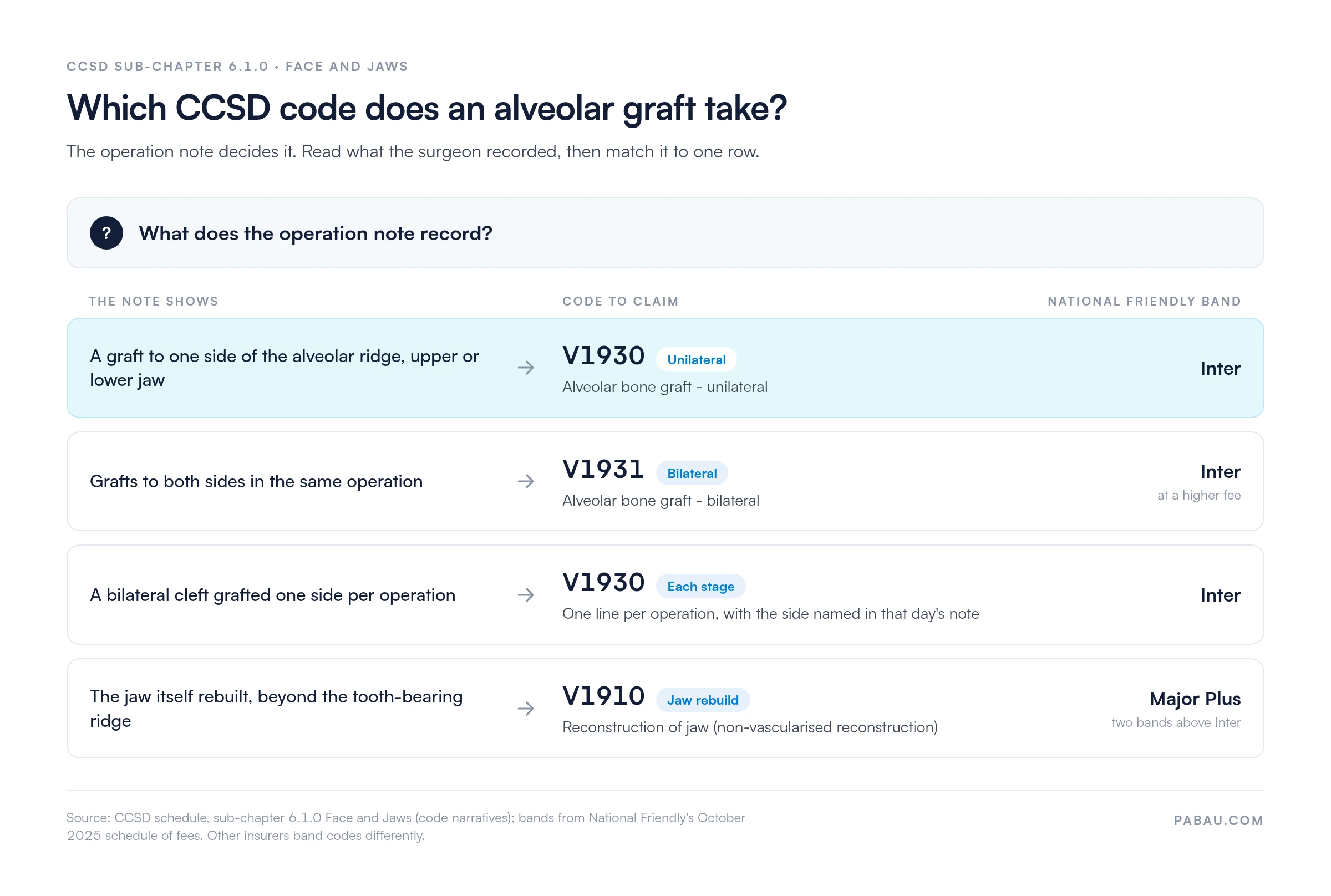
V1930 covers one side, and V1931 covers both sides grafted in the same operation. Code what the operation note describes, never the code that pays more.
Insurers can ask for the operation note when V1931 is claimed. If the note describes only one side, expect the claim to be re-coded to V1930 and the difference recovered.
A bilateral cleft is sometimes grafted one side at a time. Each stage is then billed as V1930, with the side named in that day’s note.
Several codes in the same CCSD sub-chapter describe jaw and ridge work that can look like V1930 on a claim. Match the note to the code before you submit.
When a graft and an implant share one session, check the insurer’s combination rules before both codes go on the claim. National Friendly bands V1910 and V1040 as Major Plus, two bands above V1930 (Inter). A wrong choice there changes the fee as well as the code. Our guide to Bupa CCSD codes explains how one large insurer applies the schedule.
The chart below lines up four common cases, from what the note records to the code and its National Friendly band.
Pair V1930 with an ICD-10 diagnosis that supports a graft on one side. Confirm the code and its wording in the WHO ICD-10 browser, the edition the UK uses.
ICD-10 cleft codes carry their own side count. Q36.0, Q37.0, Q37.2, Q37.4 and Q37.8 all describe a bilateral cleft lip, so they sit naturally with V1931. A V1930 claim with one of them is still correct for a staged graft, as long as the note names the side treated.
An acute fracture code such as S02.6, fracture of mandible, describes the injury itself. A graft months later for the healed defect fits T90.2 better.
Before you submit, read three things side by side: the side named in the operation note, the ICD-10 code and the CCSD code. If one of them disagrees with the other two, fix it before the claim leaves the practice.
A V1930 claim is only as strong as the records behind it. Keep these on the patient file, ready for the insurer to request:
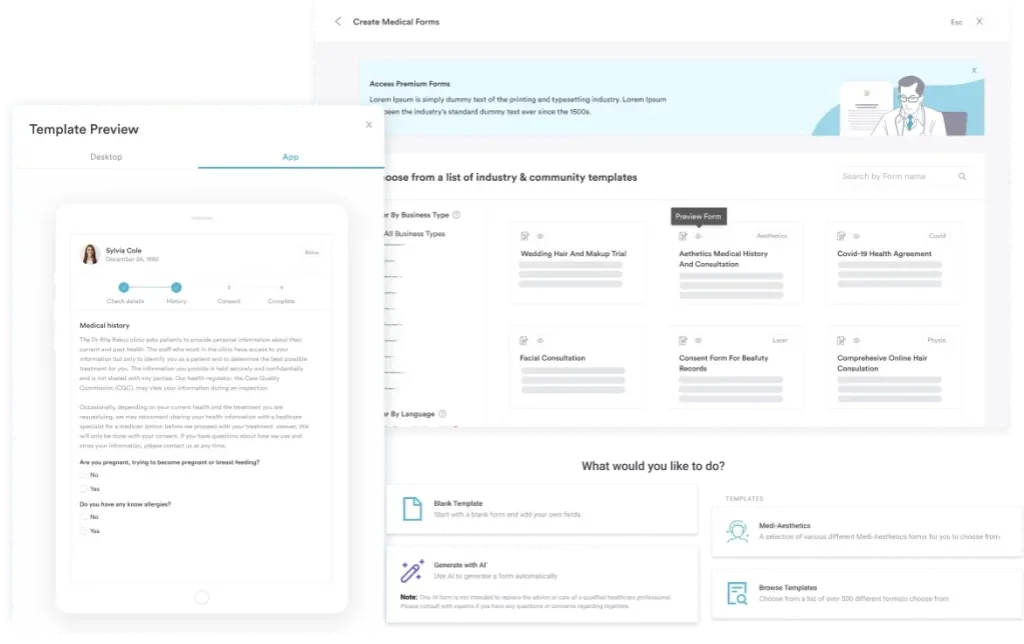
Pabau, a practice management platform for private practices, lets you build the operation note as a digital form. The side and the donor site then become required fields, so neither can be skipped.
Most insurers want planned surgery approved before it happens, and the patient’s policy decides what is covered. Send the request with the CCSD code, the side and the clinical reasons, which a prior authorization form keeps in one place. Two exclusions matter more for V1930 than for most codes.
Private medical insurance is mostly written for acute conditions that start after cover begins. A cleft present from birth can fall under a pre-existing or congenital condition exclusion. A ridge graft before implants can be treated as dental work, which many core policies leave out.
The table below is a starting point, so confirm each detail with the payer before the operation date.
Once the operation is done, the claim follows the same five steps whichever insurer pays it.
The anesthesiologist bills separately for the same operation. The hospital sends its own account for operating room and bed costs.
The table lists six common reasons for rejection, what triggers each one and how to fix it before you resubmit.
If a claim is still refused, follow the appeal process in the insurer’s current provider manual. Only commit to a deadline you have confirmed there.
In many oral and maxillofacial practices, the authorization sits in an email and the operation note in another system. Then someone keys the claim in by hand. Each handoff is a chance to drop the reference number or the side grafted.
Pabau keeps those steps on one patient record. For cleaner claims management, it sends each claim electronically through Healthcode and to Bupa. The authorization code, dates and sessions sit on the patient’s case, with a warning when one is missing.
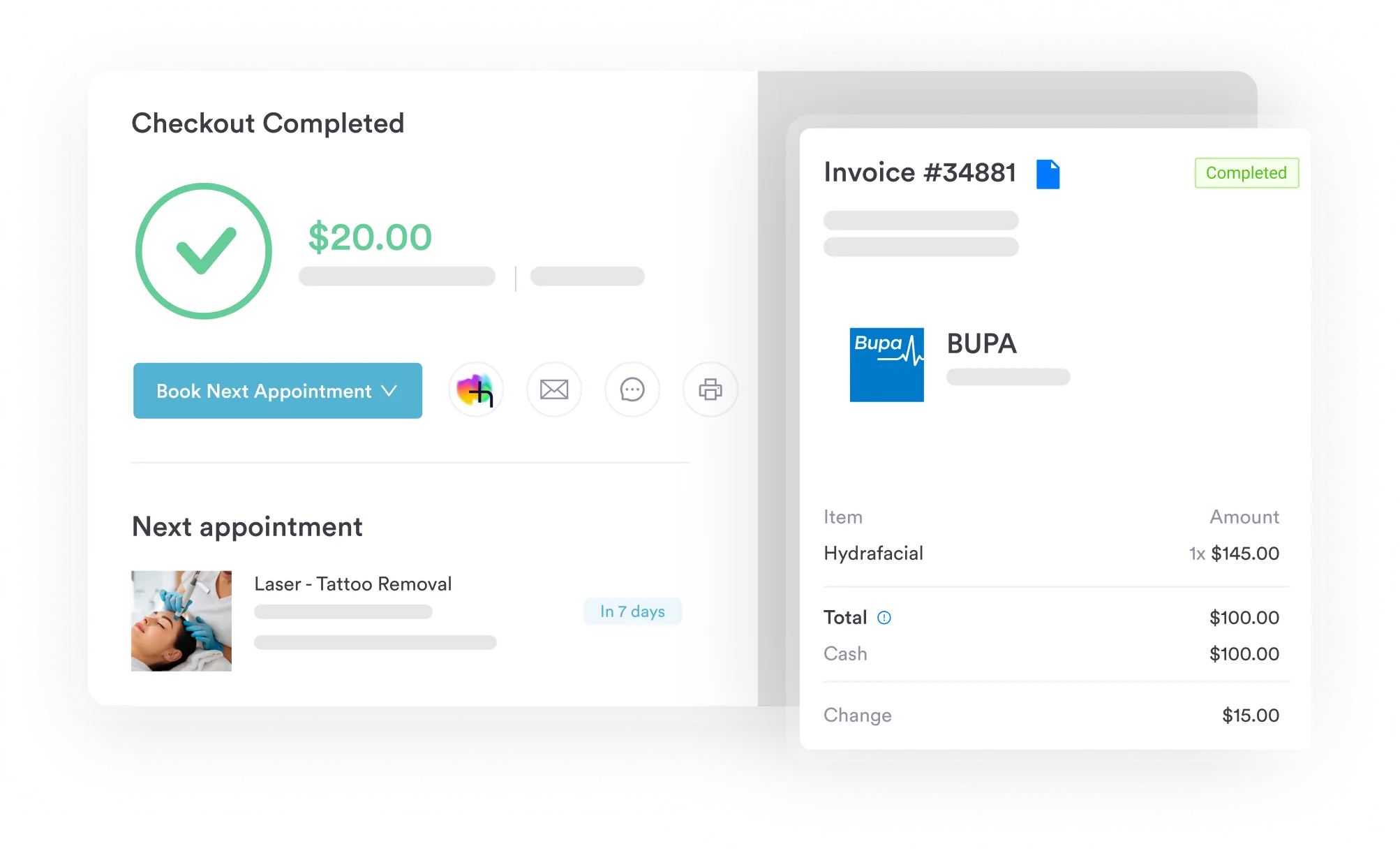
The result is fewer claims bounced for a missing reference or a mismatched side. Your team spends less time on rework and more time with patients.

Pabau keeps authorization codes on the patient’s case and sends claims electronically through Healthcode and to Bupa. You see each claim’s status without phoning the insurer.

V1930 is a simple code once the note names the side. Most trouble comes from a note without laterality, a cleft diagnosis that points to the other side count, or cover nobody checked.
Settle the side, the diagnosis and the policy before the operation, and the insurer has little left to query. Book a demo to see how Pabau tracks authorizations and sends your Healthcode claims from one patient record.

Need a full Bupa CCSD billing reference? Bupa CCSD codes covers Bupa’s procedure list and how its claims work.
Coding another private procedure? CCSD codes indexes the procedure codes Pabau covers, chapter by chapter.
Checking Bupa fees before you invoice? Bupa procedure codes and fee schedule walks through Bupa’s recognized codes and fee tiers.
CCSD code V1930 covers an alveolar bone graft on one side of the jaw. Bone, usually from the hip, is packed into a defect in the tooth-bearing ridge. A graft to both sides in the same operation is billed as V1931 instead.
V1930 is a unilateral alveolar bone graft, and V1931 is the bilateral version for both sides in one operation. The operation note decides which applies. A V1931 claim for a one-sided graft is likely to be re-coded on review.
Usually, yes. Most UK private insurers expect planned surgery to be authorized before it happens, and the reference goes on the claim. Check the policy covers the indication too, since congenital and dental exclusions are common.
It depends on the CCSD coding principles and the insurer’s combination rules. Check both before you add a separate line for the hip harvest. The operation note should describe the harvest as its own step.
Common pairings are Q36.9 for a unilateral cleft lip, and Q37.1, Q37.5 or Q37.9 where the one-sided cleft involves the palate. K08.2 fits a resorbed ridge, and T90.2 a healed facial fracture. The code must match the indication in the note.
Yes, when bone has to be rebuilt before implants go in. Many UK policies exclude dental treatment, though, so confirm cover with the insurer first. The implant itself is billed separately, as F1151 for stage I placement.