CPT code 93503: Swan-Ganz catheter billing and modifiers
CPT code 93503: Official descriptor and procedure overview In the AMA CPT code s...

Last Updated: Oct 23, 2026
C1813 is the CCSD code for correction of ptosis of eyelid with autologous fascia lata. Surgeons use it for frontalis suspension, where strips of the patient's own thigh fascia link a drooping upper lid to the forehead muscle. The patient can then lift the lid by raising the brow. The code sits in chapter 4 of the CCSD schedule, Eye and orbital contents, under Eyebrow and lid.
The graft is the detail the claim turns on. A simple or complex ptosis repair without fascia lata bills under a different code, and CCSD blocks those codes from pairing with C1813. The sections below cover the operative note, the insurer checks and the mistakes that trigger queries.
Let Pabau's smart automation suggest the right codes, reduce claim denials, and keep your practice compliant—effortlessly.
Automate repetitive tasks and focus on what matters most—your patients.
Reduce coding errors and ensure compliance with the latest regulations.
Clean claims, fewer denials, and faster reimbursements.
Powerful insights and reporting to help your practice thrive.
HIPAA compliant SOC 2 certified GDPR-compliant Trusted by 4,000+ clinics worldwide

CCSD code C1813 covers correction of ptosis of the eyelid with autologous fascia lata, the procedure usually called frontalis suspension.
The graft comes from the patient’s own thigh, so the operative note should record the harvest site as well as the lid work.
CCSD lists C1810, C1812, C1818, C1420, C1700 and C1710 as unacceptable combinations with C1813.
Insurers often ask for evidence that the droop affects vision before they authorize ptosis surgery.
Most queried C1813 claims trace back to a missing authorization, a vague note or a blocked code pair.
CCSD code C1813 is the schedule entry for correction of ptosis of eyelid with autologous fascia lata. Surgeons use it when they lift a drooping upper lid with a sling made from the patient’s own fascia lata. That tissue is the tough sheet of connective tissue on the outer thigh.
The code sits in chapter 4 of the CCSD schedule, Eye and orbital contents, under 4.2.0 Eyebrow and lid. CCSD grades it as a Major procedure. UK private medical insurers use CCSD codes to process consultant invoices, so the code on the claim tells them exactly which operation took place.
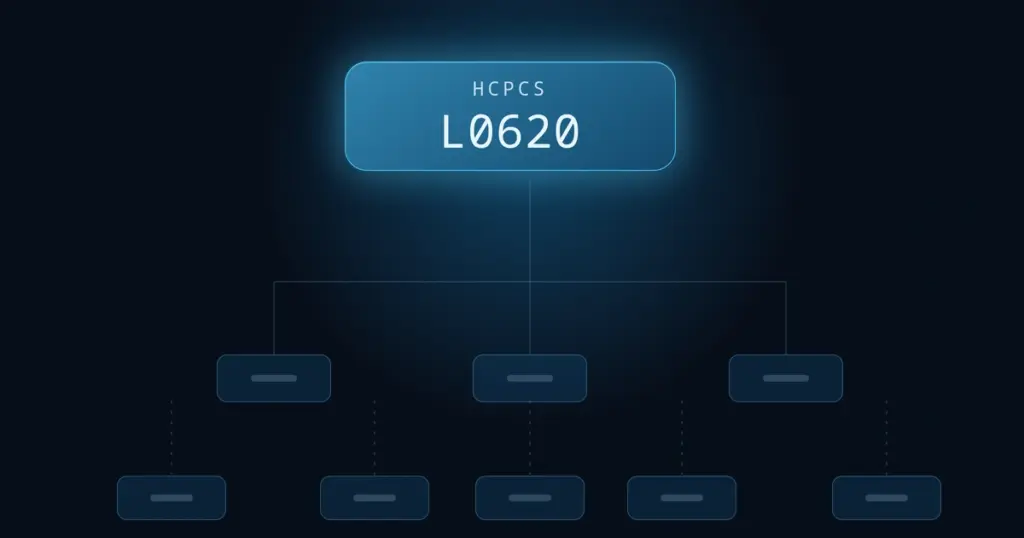
Two words in the descriptor carry the claim. “Autologous” means the graft came from the same patient. “Fascia lata” names the tissue. If the sling used any other material, C1813 is the wrong entry, and the note will show it. The diagram below shows which entry each type of repair points to.
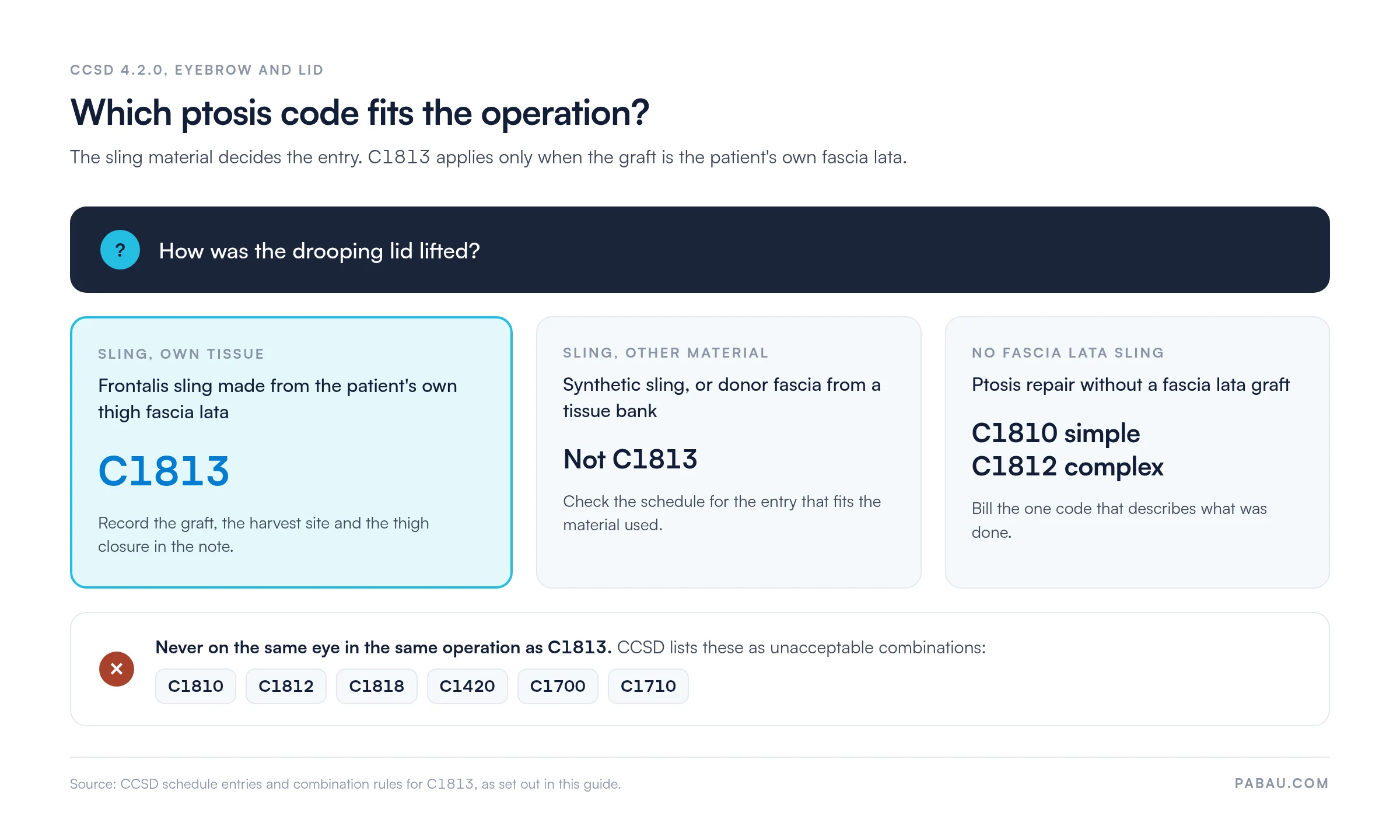
Frontalis suspension connects the upper lid to the frontalis, the forehead muscle that raises the brow. Once the sling is in place, the patient lifts the lid by lifting the brow. Surgeons choose it when the lid’s own lifting muscle, the levator, works poorly or not at all.
Typical indications include congenital ptosis with poor levator function, myogenic ptosis and some cases of third nerve palsy. The operation runs in three steps:
Because the procedure involves a second surgical site, the thigh, the paperwork has more to cover than a standard lid repair. That is where many C1813 claims slip.
The eyelid section of the schedule holds several ptosis entries, and they look alike on an invoice. CCSD treats the codes below as unacceptable combinations with C1813. In practice, that means you should not bill any of them with C1813 for the same eye in the same operation.
The CCSD Technical Guide (October 2025) explains how the schedule handles combinations. Always check the current schedule version as well, since entries and rules change between releases.
Tarsorrhaphy, coded C1640, is absent from the list above, so it can share a claim with C1813 when both are done in one episode. Confirm each insurer’s bundling rules before you submit. Another chapter 4 entry, C6160, names the seton device in its descriptor, which keeps that implant inside the surgical fee.
An insurer reviewing a C1813 claim will look for the two facts in the descriptor. The note should show that fascia lata was used, and that it came from the patient. A note that says “brow suspension performed” without naming the material leaves the reviewer guessing.
A note that supports C1813 records:
Write the note on the day of surgery. A later addendum is possible, but insurers give more weight to a note written at the time.
Many insurers treat ptosis surgery as cosmetic unless the records show a functional problem. Before they authorize C1813, expect them to ask how far the lid covers the pupil. Some also want a visual field test or clinical photographs. The same cosmetic test applies to other chapter 4 eye codes, including C3112 for unilateral squint correction.
Pair C1813 with a diagnosis code that matches the cause. UK insurers use ICD-10, where Q10.0 covers congenital ptosis and H02.4 covers acquired ptosis of the eyelid. A congenital case coded as acquired, or the reverse, is an easy way to earn a query.
Authorization rules differ from one insurer to the next and change over time. Confirm the code with each insurer before the surgery date. Bupa members can be checked on the Bupa code search, and the Bupa CCSD codes guide explains how Bupa applies the schedule.
Most CCSD claims travel electronically through Healthcode, which passes them to the insurer. A typical C1813 claim follows this path:
Five checks catch most problems before the insurer sees them:
If one check fails, fix it before you submit. Correcting a claim before it goes out is quicker than disputing a query later.
These are the errors that most often turn a straightforward C1813 claim into a query.
If the surgeon plans fascia lata but may switch to another material on the day, tell the insurer at authorization. A change of material changes the code, so the approval needs to allow for it.
In many practices, the operative note lives in one system and the invoice in another. The Healthcode claim often sits in a third. Each hand-off is a chance for the harvest detail or the authorization number to drop off the claim.
Pabau, the practice management platform we build for private practices, keeps those steps on one patient record. Its claims management software sends CCSD-coded claims to Healthcode from that record, with checks before submission. You can then follow each claim’s status and reconcile the payment in the same place.
The result is fewer queried claims, and less time spent chasing paperwork after the patient has gone home.
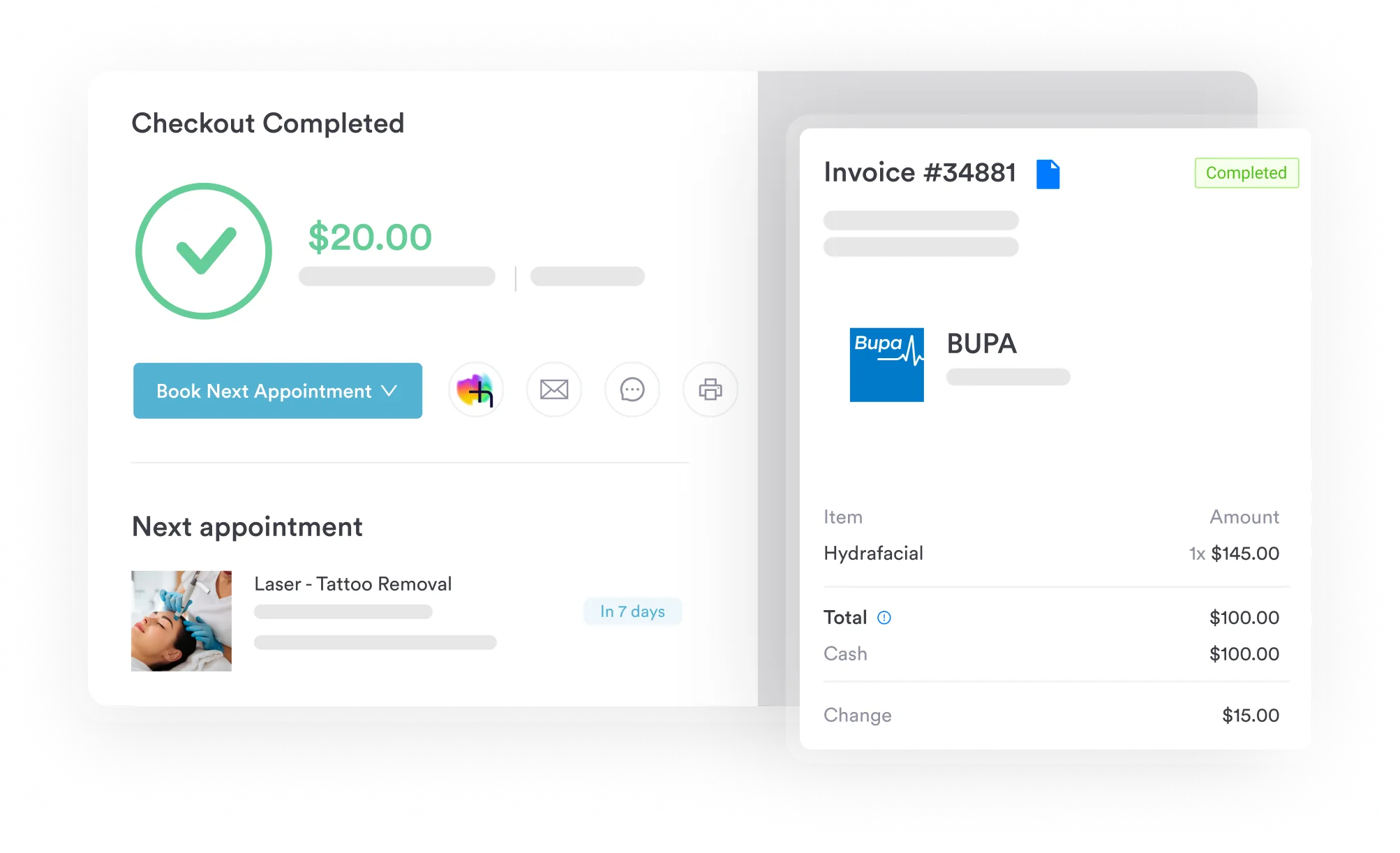

Pabau keeps the operative note, the invoice and the Healthcode claim on one patient record. That way, each C1813 submission carries the detail insurers check.

C1813 is a narrow code. It fits only when the surgeon lifts the lid with a sling of the patient’s own fascia lata. Treat the graft as the fact the claim rests on, and make sure the note says where it came from.
Confirm the authorization before the surgery date and keep the blocked ptosis codes off the invoice. Do that, and most C1813 claims go through without a query. The cost is a few minutes of checks at booking, which is far less than a resubmission takes.
Want your notes, invoices and Healthcode claims on one record? Book a demo and we’ll walk you through a private surgical claim from start to finish.

Billing across several private insurers? Bupa CCSD codes explains how Bupa applies the schedule, and where its rules differ from other insurers.
Treating a lid lesion instead? CCSD code C1230 covers curettage or cryotherapy of an eyelid lesion.
Working at the corner of the eye? CCSD code C1110 walks through excision of a lesion of the canthus.
Billing ptosis repair for US patients? CPT code 67904 covers levator resection, the CPT route for blepharoptosis repair.
C1813 covers correction of ptosis of the eyelid with autologous fascia lata. That is a frontalis suspension sling made from the patient’s own thigh fascia. The anesthetist’s fee is billed separately.
Yes, if the surgeon uses the child’s own fascia lata. Surgeons often wait until the child is old enough for a usable graft. A younger child may get a temporary synthetic sling, which needs a different code.
No. Autologous means the tissue came from the same patient. Fascia from a tissue bank doesn’t meet the C1813 descriptor, so check the schedule and the insurer before you bill.
The descriptor names autologous fascia lata, so the harvest is part of the procedure C1813 describes. Record it in the note rather than adding a graft code without checking the schedule.
Insurers handle bilateral procedures in different ways. Ask how they want it listed when you request authorization, and record which eyes were treated in the note.