CCSD code H0410: Panproctocolectomy and ileostomy
CCSD code H0410: What it covers and when to use it CCSD code H0410 sits within t...

Last Updated: Nov 23, 2026
25020 is the CCSD code for intravenous regional sympathetic block (guanethidine block) – 1 injection.
Let Pabau's smart automation suggest the right codes, reduce claim denials, and keep your practice compliant—effortlessly.
Automate repetitive tasks and focus on what matters most—your patients.
Reduce coding errors and ensure compliance with the latest regulations.
Clean claims, fewer denials, and faster reimbursements.
Powerful insights and reporting to help your practice thrive.
HIPAA compliant SOC 2 certified GDPR-compliant Trusted by 4,000+ clinics worldwide

CCSD code 25020 covers one intravenous regional sympathetic block with guanethidine, billed per injection per limb
CRPS types I and II are the primary funded indications; insurers typically require a confirmed diagnosis before authorising the procedure
Guanethidine is not widely available as a licensed UK preparation; practices must document sourcing and may need to bill the drug separately
Pabau’s digital procedure documentation tools capture tourniquet times, drug dose, and patient response in a structured clinical record
CCSD code 25020 covers an intravenous regional sympathetic block performed by injecting guanethidine into an isolated limb segment via the Bier block technique, billed as one injection. The code sits within the sympathetic block cluster of the CCSD pain management schedule, alongside adjacent codes covering other sympathetic and ganglion block procedures.
The CCSD schedule is maintained by the Central Consultants and Specialists Division; always verify the current descriptor and unit value directly against the published schedule, as codes and fees are updated annually.
The procedure uses the Bier block technique: The limb is exsanguinated, a pneumatic double-cuff tourniquet is inflated above systolic pressure to isolate the limb’s circulation, and guanethidine is injected intravenously into a peripheral vein within that isolated segment.
Guanethidine works by depleting noradrenaline at sympathetic adrenergic nerve terminals. Blocking noradrenaline release reduces sympathetic tone in the limb, which is the therapeutic mechanism for sympathetically maintained pain conditions. The tourniquet is kept inflated for 15 to 20 minutes after injection to prevent systemic absorption of guanethidine before it has taken effect, then released slowly.
The “1 injection” scope of CCSD code 25020 means the entire procedure described above, for one limb, constitutes a single billable unit. Each additional limb treated in the same session requires a separate claim line with the appropriate bilateral or repeat modifier.
Complex regional pain syndrome (CRPS) is the primary funded indication for CCSD code 25020 billing across UK private insurers. Both CRPS type I (reflex sympathetic dystrophy, formerly RSD) and CRPS type II (causalgia, associated with a defined nerve injury) fall within the funded scope, subject to insurer policy at the time of treatment.
NICE guidance on CRPS management informs insurer funding decisions. Practices should retain a copy of the NICE CRPS guideline reference used to support treatment in their pre-authorisation request. ICD-10 diagnosis codes must be verified against the current NHS ICD-10 edition in use; the treating clinician bears responsibility for accurate diagnostic coding.
Understanding the bundling scope of CCSD code 25020 is essential for avoiding unbundling errors, which are among the most common reasons for claim adjustment by UK private insurers.
CCSD bundling rules are not all publicly documented. Treat the above as a working guide and confirm any borderline item with the relevant insurer before billing. Pabau’s private healthcare claims management tools let practices flag code-bundling rules at the point of claim creation, reducing unbundling errors before submission.
Guanethidine is not widely available as a commercially licensed preparation in the UK. Many pain clinics source it as a special-order formulation. Document the preparation source, batch reference, and acquisition cost in the patient file. This record supports any subsequent drug-cost query from the insurer and satisfies MHRA traceability expectations for unlicensed medicines.
CCSD code 25022 covers the stellate ganglion block, a cervico-thoracic sympathetic procedure that targets the stellate ganglion via a neck injection. It is entirely distinct from CCSD code 25020 in anatomy, technique, and indication, though both sit in the sympathetic block cluster and are occasionally confused by billing staff unfamiliar with the procedure differences.
The decision rule is straightforward: If the procedure targets a limb using the Bier block technique with guanethidine, use CCSD code 25020. If it targets the stellate ganglion via a neck injection for head, face, or upper-extremity sympathetic conditions, use CCSD code 25022. Never apply both codes for the same anatomical territory on the same claim line.
CCSD modifiers adjust the base code to reflect bilateral procedures, repeat injections, or laterality. Applying the wrong modifier, or omitting one that is required, is a leading cause of claim rejection for CCSD code 25020.
When submitting via Healthcode EDI, append modifiers in the designated modifier field rather than embedding them in the narrative. Confirm the exact modifier codes accepted by each insurer, as CCSD modifier conventions are not fully standardised across all UK payers and may vary between Bupa, AXA Health, Aviva, and Cigna.
Missing or incomplete documentation is the single most common audit trigger for CCSD code 25020 claims. UK private insurers conducting post-payment audits routinely request procedure notes and monitoring records; a claim that cannot be substantiated by the clinical record may be recouped.
Pabau’s digital procedure documentation and structured clinical records allow pain clinics to capture all required fields in a single workflow, reducing the risk of incomplete records at audit. Store the following in the patient file before submitting the claim:
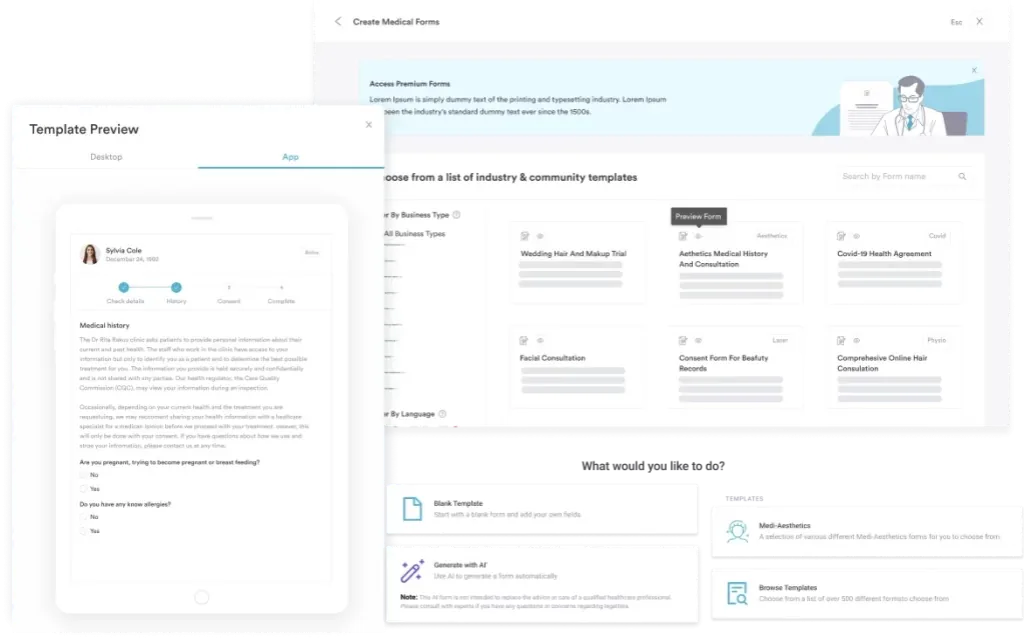
Pabau’s compliance management tools can be configured to flag incomplete procedure records before a claim is submitted, so documentation gaps are caught at the practice level rather than at the insurer audit stage.
Pre-authorisation for CCSD code 25020 is required by the major UK private medical insurers. The specific evidence required, and the turnaround time for a decision, varies by insurer. All pre-auth requirements stated below reflect current published policy as of early 2026 and should be verified directly with each insurer before submitting a request, as policies change.
When submitting a pre-authorisation request, include the CCSD code (25020), the anticipated number of injections in the planned series, the ICD-10 diagnosis code, and evidence that conservative management has been tried and has not achieved adequate pain control. For serial injection programmes, some insurers will authorise the full series in a single request; others re-authorise after each injection or after the first two. Confirm this at the initial pre-auth stage to avoid gaps mid-series.
The Bupa CCSD billing guide on this site covers Bupa-specific invoicing requirements in more detail.

Pabau lets UK private practices submit CCSD-coded claims through Healthcode, capture procedure documentation in structured clinical records, and track pre-authorisation status against each appointment. See how it works for pain management clinics.

CCSD unit values and negotiated insurer rates are updated annually. Any specific fee figures cited in this article reflect the CCSD schedule current at time of publication; always verify the current unit value against the live schedule at ccsd.org.uk before invoicing.
Several factors affect the total reimbursement for a CCSD code 25020 episode beyond the procedure fee itself:
Claims for CCSD code 25020 are submitted via Healthcode EDI for all major UK private insurers. Healthcode validates the CCSD code, appended modifiers, and diagnosis codes at submission. Payment timelines vary by insurer but typically run 14 to 30 days from clean-claim receipt for electronically submitted invoices.
CCSD code 25020 claims are denied most often for pre-authorisation failures and documentation gaps, not for coding errors in the code number itself. Knowing the denial patterns in advance makes them preventable.
Run a pre-submission check before every CCSD 25020 claim: confirm the pre-auth reference is on the claim, the diagnosis code matches the clinical record, and the procedure note is complete with tourniquet times and drug dose. These three checks resolve the majority of denial reasons before the claim reaches the insurer.
Unbundling occurs when services integral to CCSD code 25020 are billed as standalone codes on the same claim date. UK private insurers audit for unbundling and will adjust or recoup claims where bundled components have been separately itemised.
Same-day bilateral billing is permitted, but requires two separate claim lines (one per limb) with appropriate laterality modifiers, not a single 25020 claim with a multiplier. For a staged series where injections occur on different dates, each session is a clean separate claim. Unbundling rules should be confirmed with the CCSD schedule and the relevant insurer, as not all bundling policies are explicitly published.
CCSD code 25020 is a niche but audit-sensitive billing code where claim success depends less on coding the procedure correctly and more on the pre-authorisation trail and clinical documentation behind it. Guanethidine’s limited availability, the CRPS diagnosis requirement, and the insurer-specific pre-auth rules create several points where claims fail before the procedure fee is ever disputed.
Pabau helps UK private pain clinics manage this by linking procedure documentation directly to claim creation, capturing tourniquet times, drug sourcing records, and patient response in a structured clinical record that can be produced on audit request. To see how Pabau handles CCSD billing workflows for pain management clinics, book a demo.

Billing other CCSD pain codes? Bupa CCSD billing guide covers invoicing requirements, code submission rules, and documentation standards for Bupa-recognised consultants across the CCSD schedule.
Need to manage private practice compliance records? Pabau’s compliance management tools let UK private practices configure documentation checklists and audit-readiness flags at the point of claim creation.
Looking for a complete clinical records solution? Pabau’s structured clinical records capture procedure notes, drug records, and monitoring data in one place, supporting CCSD audit requests without manual file retrieval.
CCSD code 25020 describes an intravenous regional sympathetic block performed with guanethidine, covering one injection per limb. The procedure uses the Bier block technique: The limb is isolated with a pneumatic tourniquet, guanethidine is injected intravenously into the isolated segment, and the tourniquet is held for at least 15 minutes before controlled release to allow the drug to deplete noradrenaline at sympathetic nerve terminals.
Not automatically. The base code covers the procedural fee; the drug cost may be billed separately depending on insurer policy, particularly where guanethidine has been sourced as a special-order preparation. Confirm with the individual insurer before billing the drug cost separately, and document the acquisition source and batch reference in the clinical file.
CCSD code 25020 covers an intravenous regional guanethidine block targeting a peripheral limb using the Bier block technique; CCSD code 25022 covers a stellate ganglion block, a cervico-thoracic sympathetic injection delivered directly into the neck. The two codes differ in anatomical target, drug, and delivery method and cannot be substituted for each other. Apply 25020 when treating a limb with IV guanethidine and 25022 when targeting the stellate ganglion.
Bupa, AXA Health, Aviva, and Cigna all typically require pre-authorisation for CCSD code 25020 as an interventional pain procedure. Each insurer requires a confirmed CRPS diagnosis and evidence of failed conservative treatment before authorising the procedure. Requirements change periodically; verify directly with the insurer before each treatment episode.
Bill two separate claim lines, one per limb, each carrying CCSD code 25020 with the appropriate left or right laterality modifier. Do not use a single 25020 claim with a quantity multiplier. Ensure the pre-authorisation covered bilateral treatment and that the procedure note documents both limbs separately, including individual tourniquet times.
The most common denial reasons are a missing pre-authorisation reference number, an unsupported ICD-10 diagnosis code, an incomplete procedure note (missing tourniquet times or drug dose), a missing laterality modifier, or unbundling errors where services integral to 25020 have been separately itemised. Running a three-point pre-submission check covering pre-auth reference, diagnosis code, and procedure note completeness resolves most of these before the claim reaches the insurer.