CRM for chiropractors: how to manage patients, bookings and marketing
A CRM for chiropractors is a patient relationship management system built around...

Last Updated: Oct 13, 2026

Zenoti is enterprise spa and salon software built for high-volume wellness chains, not clinical medspa operators needing healthcare-grade documentation.
Users consistently praise Zenoti’s multi-location management and reputation monitoring across 200+ platforms, rating it 4.3/5 on both Capterra and G2.
Common complaints include a steep learning curve, opaque pricing, mobile app performance issues after recent updates, and slow form customization.
Pabau offers purpose-built clinical documentation, consent forms, and before-and-after photo workflows that Zenoti lacks as core features.
Most medspa operators considering Zenoti are asking the same question: is this software built for businesses like mine, or will I spend months configuring a platform designed for a luxury hotel spa chain? This Zenoti review cuts through the marketing to give you an honest answer. Zenoti is genuinely powerful software, but its strengths and weaknesses map directly to clinic size, clinical complexity, and how you define “value.”
For multi-location wellness operators running high-volume schedules, Zenoti competes with almost nothing. For single-location aesthetic clinics needing clinical consent workflows and treatment records, the picture is more complicated. This guide covers Zenoti’s features, pricing model, verified user sentiment from Capterra and G2, and where Pabau is the better fit for clinical practices.
Zenoti is cloud-based salon, spa, and medspa management software serving businesses from single-location studios to chains with hundreds of outlets. Founded in 2010, it has built a strong reputation in the enterprise wellness and hospitality segment.
The platform covers appointment scheduling, point of sale (POS), inventory management, staff management, marketing automation, loyalty programs, and custom reporting under one roof, alongside what many reviewers cite as its most differentiated feature: automated reputation management that monitors feedback across 200+ platforms.
Module counts only tell part of the story — how a platform handles automated patient engagement, from reminders to recalls, often matters more day to day.
Understanding who Zenoti is built for matters before evaluating whether it suits your business. Its clearest market is large wellness chains, resort spas, and franchise groups that need centralized oversight across many locations, not individual clinics prioritizing clinical documentation.
A medical spa CRM needs to handle both operational workflows and patient-facing clinical records, and those two requirements pull in different directions depending on your volume and regulatory obligations.
What Zenoti does not emphasize is clinical record-keeping. Its form builder exists, but users on Reddit’s r/MedSpa community have described it as “super slow and clunky,” noting that customization is possible but time-consuming.
A platform that treats clinical documentation as an afterthought is a meaningful limitation for practices performing injectable treatments, laser procedures, or any service requiring informed consent and treatment history tracking.
Zenoti earns its reputation in several areas. Reviewers on both G2 (4.3/5) and Capterra (4.3/5) consistently cite specific capabilities that competitors struggle to match at the same scale. Understanding these helps identify which businesses Zenoti genuinely serves well.
Zenoti’s standout strength is its ability to operate at scale. Chains with 10, 50, or 100+ locations can manage scheduling, staff permissions, reporting, and inventory from a single dashboard. Pricing, service menus, and promotions can be standardized across locations or customized per site.
For operators navigating multi-location med spa management challenges, this level of centralized control is genuinely best-in-class. The r/MedSpa community confirms it: “the largest medspa chains use Zenoti” for this reason specifically.
Zenoti sends automated review requests after every visit and monitors responses across what their platform claims is 200+ review platforms. For high-volume wellness businesses where online reputation is a significant revenue driver, this is a genuine differentiator.
The reputation management tools that matter most to spa operators, including response tracking and sentiment monitoring, are built directly into the Zenoti workflow rather than requiring a separate integration.
Custom reporting is one of Zenoti’s most-cited strengths in verified reviews. The platform allows operators to build dashboards pulling revenue, staff performance, service category, and client retention data across all locations simultaneously. For operators focused on tracking med spa KPIs at a business-wide level rather than per-treatment, Zenoti’s reporting infrastructure is significantly more flexible than most mid-market alternatives. Splitting scheduling and records across two tools creates a practice management job nobody owns.
Zenoti’s own blog acknowledges that its onboarding process can feel overwhelming. In response, it provides dedicated onboarding teams for enterprise clients. Reviews on Trustpilot frequently name individual onboarding specialists, describing the human support as a key reason they moved forward despite the platform’s complexity. This is a meaningful mitigation, but it does not eliminate the underlying learning curve.

Pabau is purpose-built for aesthetic clinics and medical spas. Clinical notes, consent forms, before-and-after photos, and automated recalls are built in from day one, not bolted on.

No platform is right for every clinic. Zenoti’s weaknesses are consistent across review platforms and community discussions, and they cluster around three themes: complexity, pricing, and clinical depth.
Zenoti’s own published content acknowledges that onboarding can feel overwhelming. Verified reviews on G2 and Capterra cite “steep learning curves” and “complex initial setup” repeatedly. For smaller practices without dedicated IT or operations staff, this is a real risk.
A medspa booking platform should reduce administrative burden, not add to it during the first three to six months of use. Practices should budget significant staff time for training before going live.
Zenoti does not publish its pricing. All costs are negotiated through enterprise sales conversations. Multiple reviewers note that they felt pricing did not match the value received, particularly for single-location or early-stage businesses. For a detailed look at what Zenoti actually costs based on available data points, see the Zenoti pricing breakdown we’ve compiled from user-reported figures across review platforms.
Evaluating a booking platform at the other end of the market? Our StyleSeat review takes the same look at its pricing and fees.
Zenoti’s form builder is functional, but it is not a clinical documentation system, and it is not a dedicated EMR (electronic medical record). Medspa operators performing injectable treatments, laser procedures, or other services requiring detailed informed consent, treatment notes, and photo documentation need more than a customizable intake form.
Users who have flagged medspa compliance requirements around documentation note that Zenoti requires workarounds or third-party integrations to meet clinical record-keeping standards. This gap widens for practices in regulated markets where HIPAA-compliant treatment records are non-negotiable.
Apple App Store reviews for Zenoti Mobile report performance issues following recent updates, including slow load times and difficulty distinguishing provider types in the booking interface. One reviewer noted: “This new update is not good” after praising the older version. For practices where practitioners rely on the mobile app between appointments, this is a meaningful friction point worth testing before committing.
| Area | Zenoti | User sentiment |
|---|---|---|
| Multi-location management | Best-in-class for large chains | Consistently praised |
| Reputation management | 200+ platform monitoring | Cited as key differentiator |
| Custom reporting | Flexible enterprise dashboards | Strong reviews from chain operators |
| Clinical documentation | Basic form builder only | Frequently cited limitation |
| Onboarding | Complex; supported by dedicated team | Mixed; smaller teams struggle |
| Pricing | Not published; enterprise-negotiated | Perceived as high for small practices |
| Mobile app | Available; recent update issues noted | Performance complaints on App Store |
Before committing to Zenoti, run a pilot test of its form builder with two or three of your most complex consent forms. If you are performing injectables or laser procedures, you need to confirm the platform can handle your documentation workflow before signing a contract. Zenoti’s sales team moves quickly; your clinical documentation review should not.
If Zenoti’s gaps around clinical documentation and pricing transparency are relevant to your practice, Pabau vs Zenoti is a comparison worth examining before you make a decision. Pabau is built specifically for aesthetic clinics, medical spas, and healthcare practices that need scheduling, billing, and clinical workflows in one system, without enterprise-level complexity.
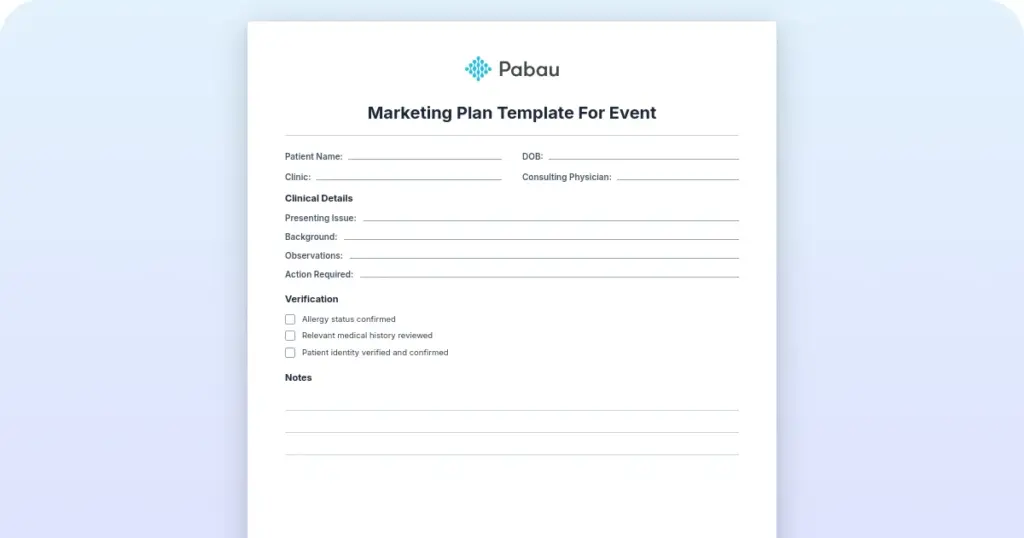
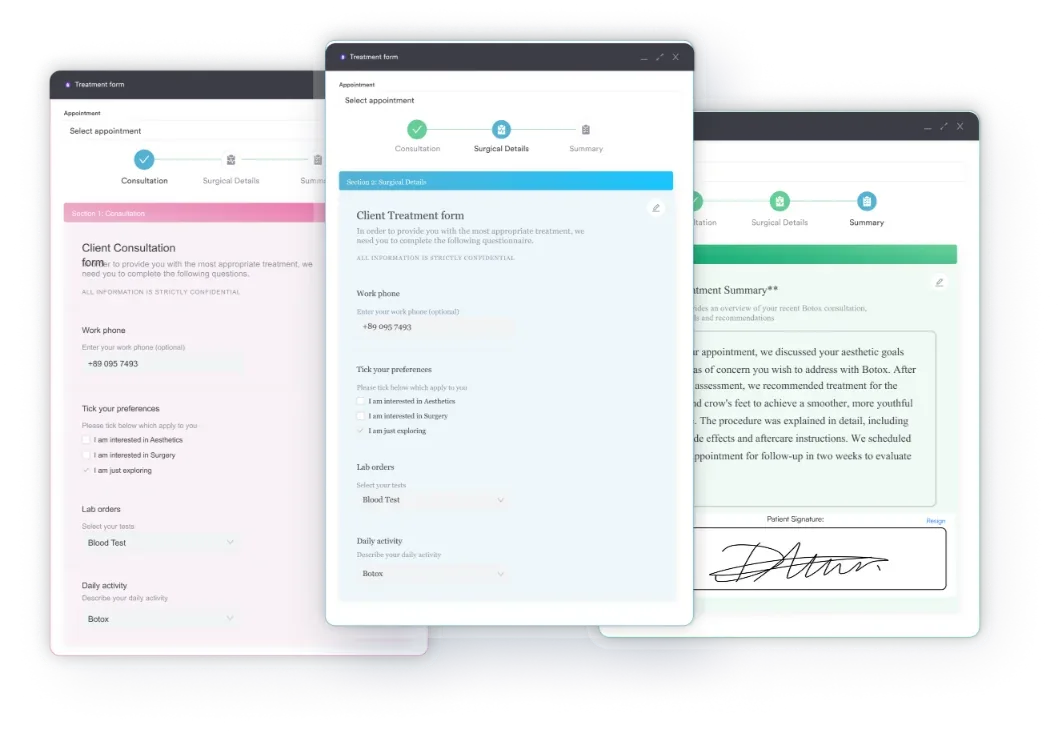
Where Zenoti treats clinical forms as a configurable module, Pabau treats them as core infrastructure. Digital intake forms, treatment consent records, and clinical notes are built into the platform from day one.
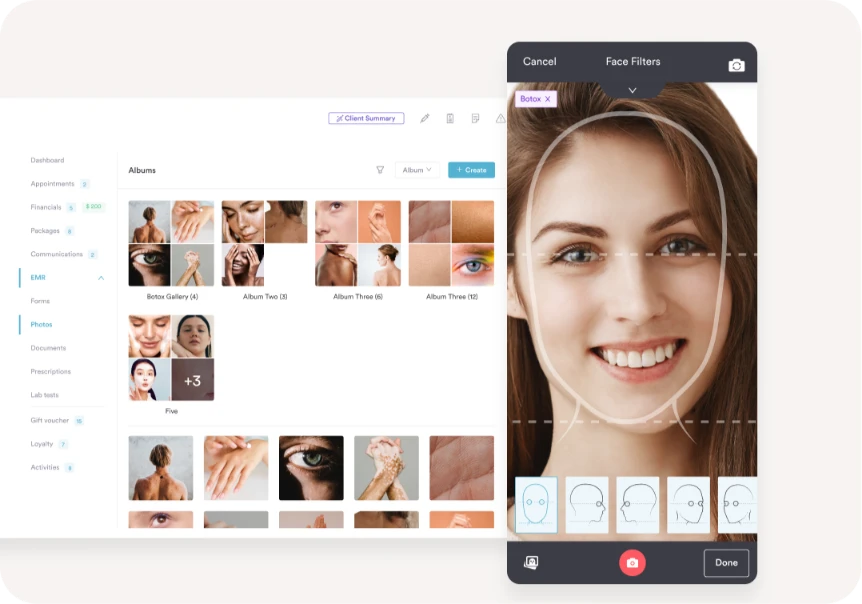
Before-and-after photos are stored against individual treatment records with before-and-after photo management that links visual documentation to the specific appointment. Injection plotting, measurement tracking, and prescription management are all native features, not integrations.
Zenoti has no purpose-built before-and-after tool — clinics rely on its generic form builder or fall back to phone cameras. Pabau’s before-and-after photo software ties every image to the treatment record from the moment it’s taken.
Pabau’s pricing starts from $104 per month and scales by location and user count, with no feature gating between tiers. The platform holds a 4.7/5 rating from 600+ verified reviews on Capterra. Reviewers consistently cite clinical documentation workflows, responsive support, and the all-in-one nature of the platform as primary reasons for choosing Pabau over alternatives.
For practices looking at medical spa software that covers both operational and clinical requirements without enterprise onboarding complexity, Pabau is worth evaluating alongside Zenoti.
Zenoti remains the stronger choice for very large multi-location chains prioritizing reputation management at scale and operational reporting across dozens of sites. Pabau is better suited to single and multi-location aesthetic clinics and medspas that need healthcare-grade documentation as a first-class feature, not an afterthought.
See the top-rated medical spa software comparison for a broader view of how these platforms stack up in context.
Zenoti is a capable enterprise platform for large wellness chains that need multi-location operations, reputation monitoring, and business-wide reporting in one system. Its 4.3/5 ratings on Capterra and G2 reflect genuine strengths, particularly for operators who have the staff and time to navigate its onboarding complexity.
For aesthetic clinics and medspas where clinical documentation is a core requirement, the picture shifts. Pabau’s purpose-built approach to consent forms, treatment records, and before-and-after photo workflows addresses the gap Zenoti leaves open. If your practice needs clinical-grade record-keeping alongside scheduling and marketing, book a demo with Pabau to see how it handles your specific documentation requirements.

Evaluating Zenoti’s pricing before committing? Zenoti pricing breakdown covers user-reported costs, plan structures, and what to negotiate for in an enterprise contract.
Wondering how much Tebra costs monthly? Tebra pricing guide breaks down Tebra’s modules, add-ons, and costs using its own pricing policy and community-reported figures.
Choosing between Tebra and DrChrono? Tebra vs DrChrono compares how each platform consolidates scheduling, clinical documentation, and medical billing for independent practices.
Zenoti is cloud-based salon, spa, and medspa management software designed primarily for enterprise wellness chains and multi-location operators. It covers scheduling, point of sale, marketing automation, reputation management, inventory, and reporting in one platform, with particular strength in large-scale multi-location management.
Zenoti does not publish its pricing publicly. Costs are negotiated through enterprise sales, and user-reported figures vary widely by business size, number of locations, and contracted features. Some operators report paying $300 to $600 or more per month, and smaller single-location businesses frequently feel the cost outweighs the value received. See the Zenoti pricing breakdown for compiled user data.
Zenoti offers a configurable form builder rather than a dedicated electronic medical record. It can capture intake forms and basic notes, but clinical record-keeping such as treatment consent, charting, and before-and-after photo documentation often relies on workarounds or third-party integrations. Practices that treat patient records as core infrastructure usually need purpose-built medspa software instead.
Zenoti works well for high-volume medical spas with multiple locations that prioritize operational reporting and reputation management. It is less suited to clinical medspa operators who need built-in consent form workflows, treatment notes, and before-and-after photo management as first-class features, since Zenoti’s clinical documentation capabilities are basic compared to purpose-built medspa clinical platforms.
The most consistent complaints across Capterra, G2, and Reddit’s r/MedSpa community include a steep learning curve during onboarding, pricing that feels high for smaller businesses, form customization that is slow and limited, and mobile app performance issues following recent updates. These issues appear most frequently among single-location or small-team operators.
Pabau is the strongest Zenoti alternative for aesthetic clinics and medspas that need clinical-grade documentation. It includes built-in consent forms, treatment records, injection plotting, and before-and-after photos as core features, starts from $65 per month, and holds a 4.7/5 rating from 600+ verified Capterra reviews. For broader alternatives, platforms like Boulevard and Mangomint serve specific wellness segments well.