CRM for chiropractors: how to manage patients, bookings and marketing
A CRM for chiropractors is a patient relationship management system built around...

Last Updated: Oct 13, 2026

A relationship checklist is a structured tool that helps clinicians and clients review relationship health across communication, trust, respect, support, and shared values.
The downloadable template is a checkbox worksheet of 31 positively phrased statements grouped into 10 domains, from communication and trust to reflection and improvement.
The template records strengths only, so red flags such as control, coercion, or substance misuse stay a matter for your clinical interview.
Repeating the checklist every few months gives couples and clinicians a dated record of what improved and what stalled.
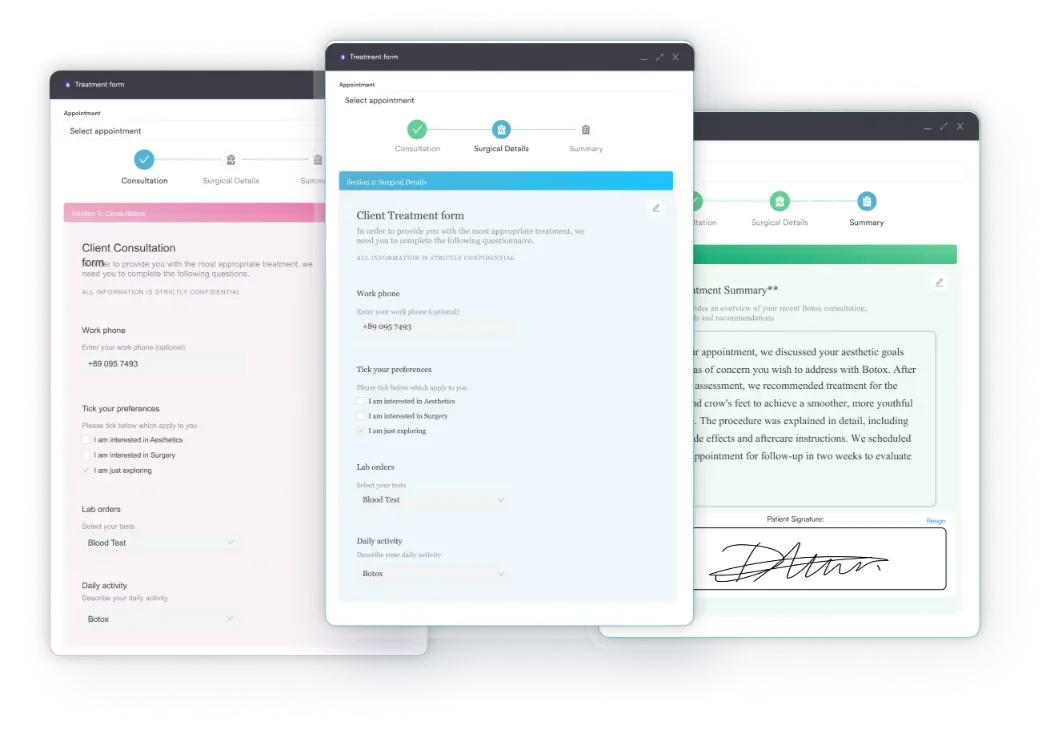
Pabau’s digital forms let therapists send the checklist before a session and store the responses in the client record.
A two-page checkbox worksheet with 31 positive statements across ten domains, from communication and trust to independence, playfulness, and reflection. Partners check the statements that describe them today, then name and date the sheet so you can compare it later.
Download templateA strong therapeutic foundation depends on systematic assessment. For that reason, the relationship checklist below is a structured worksheet that asks partners to confirm what is already working, domain by domain.
It covers ten areas, from communication and trust through to independence, playfulness, and honest reflection. Starting from strengths gives you a dated baseline. It also makes the unchecked items easy to raise in session.
A relationship checklist is a structured assessment tool that reviews the health and stability of a partnership. Rather than relying on client narrative alone, it offers concrete checkpoints across the domains that hold a relationship together.
The template on this page uses the simplest of those formats. Each statement is positively phrased, and each carries a plain checkbox that a partner either checks or leaves blank.
Other relationship inventories use yes or no columns, or a rating scale. This one does not. There is no scoring key and no risk screen, so anything the sheet does not ask about has to come from your interview.
The checklist serves three clinical purposes. First, it establishes a baseline of relationship functioning at the outset of therapy. Second, it tracks progress as couples work through interventions.
It also shows you where to probe, because an unchecked domain is an invitation to ask what is happening there. The structured format normalizes difficult conversations. Asking about conflict resolution or boundaries becomes clinical inquiry, not personal judgment.
From a documentation standpoint, a completed checklist becomes part of the clinical record. It captures the client’s own view of their relationship at a specific moment. You can also reference it later to show change, or to show patterns that emerged during treatment. This supports clinical documentation rigor and treatment justification.
The template groups its 31 statements into ten domains. Each one is worth reading on its own, because a blank in one area rarely means the same thing as a blank in another.
Read the blanks as closely as the checks. A couple who check every communication statement but leave intimacy empty are telling you something different from a couple who leave the whole sheet blank. Watch too for stonewalling and contempt, two predictors of relationship breakdown identified across decades of couples research. Yet neither appears on the sheet, and both show up in the room.
Implementing a relationship checklist involves five practical steps:
A relationship checklist is valuable across several practitioner contexts:
Consistency across clients: A checklist keeps the assessment even. Without one, clinicians tend to follow whichever issue the client raised first, and domains such as independence or playfulness go unexamined.
Therapeutic alliance and normalization: Working through the sheet together signals that relationship assessment is routine clinical work, not a sign that something has gone wrong. As a result, that reduces shame and opens space for honest reflection.
Documentation and compliance: A completed checklist is a dated record of relationship status at one point in time. In turn, it supports treatment justification and evidences your clinical reasoning, which matters for insurance, licensing, and continuity of care.
Tracking change over time: Administering the same sheet periodically shows whether therapy is shifting the dynamic. Consequently, that data informs treatment changes and demonstrates progress to the couple in front of you.
A prompt to ask harder questions: The template records strengths only. In short, a sheet that comes back mostly blank tells you where to open a fuller safety conversation, which is where risk gets assessed.
The template is a strengths inventory. It carries no items on control, abuse, infidelity, substance misuse, financial control, or isolation, so none of those will surface from the sheet itself. Practitioners bring that knowledge into the room. These are the patterns that warrant clinical intervention or a specialist referral:
When these patterns emerge in interview or disclosure, move to a safety assessment. If abuse or coercion is present, connecting the client to domestic violence resources becomes the clinical priority. In the US that means The National Domestic Violence Hotline (1-800-799-7233), or a local equivalent elsewhere. Never assume the client will recognize abuse or leave, because safety planning and referral are your responsibility.
Beyond formal therapy, couples benefit from regular relationship check-ins. A check-in is shorter than the full ten-domain sheet and focuses on the current week. How connected did we feel? Did we handle conflict constructively? Are we supporting each other’s goals? Couples who check in monthly or quarterly often catch small issues before they harden into patterns.
Clinicians can teach couples a simple ritual: twenty minutes, weekly or biweekly, with both partners answering the same questions in a brief client portal checklist. This normalizes assessment outside the therapy room. The ritual itself becomes a micro-intervention, because setting aside the time and listening without defensiveness is most of the work.
A relationship checklist clarifies when professional help is needed. Recommend couples therapy with a licensed therapist when clients report persistent patterns, including:
Look for training in an evidence-based approach, such as emotionally focused therapy, cognitive-behavioral couples therapy, or the Gottman method. Where individual trauma, an untreated mental health condition, or substance misuse is driving the distress, individual therapy usually precedes or runs alongside couples work.
One caution: standard couples therapy is not safe when abuse is present. Refer instead to specialized domestic violence advocates, or to a therapist trained in abuse assessment, and record what led you there. Your documentation supports the safety assessment and justifies the referral.
Track completed relationship checklists in your practice management system’s client records to build a longitudinal picture of relationship health over months or years. When clients return after a break, comparing the baseline sheet with a recent one shows whether earlier progress held. That comparison should shape your current treatment focus.
A relationship checklist is not a replacement for clinical judgment or comprehensive assessment. Use it as one structured tool within your full toolkit. Combine what the sheet shows with interview, observation, and collateral information, since one partner may report a problem the other will not. The checklist is your starting point, not your conclusion.
Most practices hand this sheet over on paper. It gets completed in the waiting room, scanned if someone remembers, and filed somewhere the next clinician will not think to look. As a result, comparing this month’s answers with the ones from March means digging through a folder.
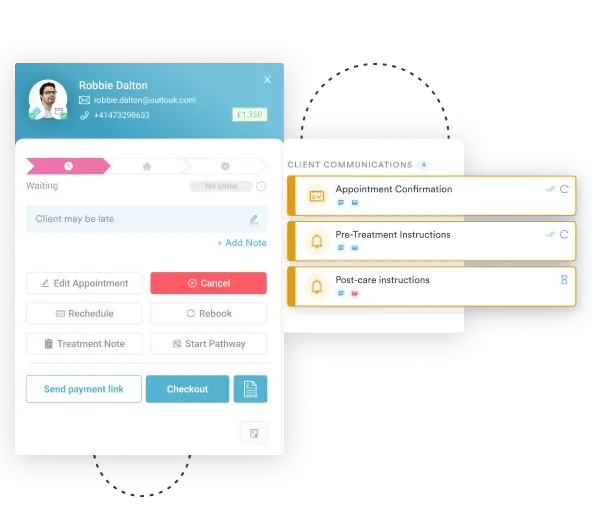
Practice management software like Pabau turns the checklist into a digital form. You send it before the appointment, the client completes it privately, and the answers land in their record automatically. Each submission is dated, so the baseline and every later check-in sit side by side.
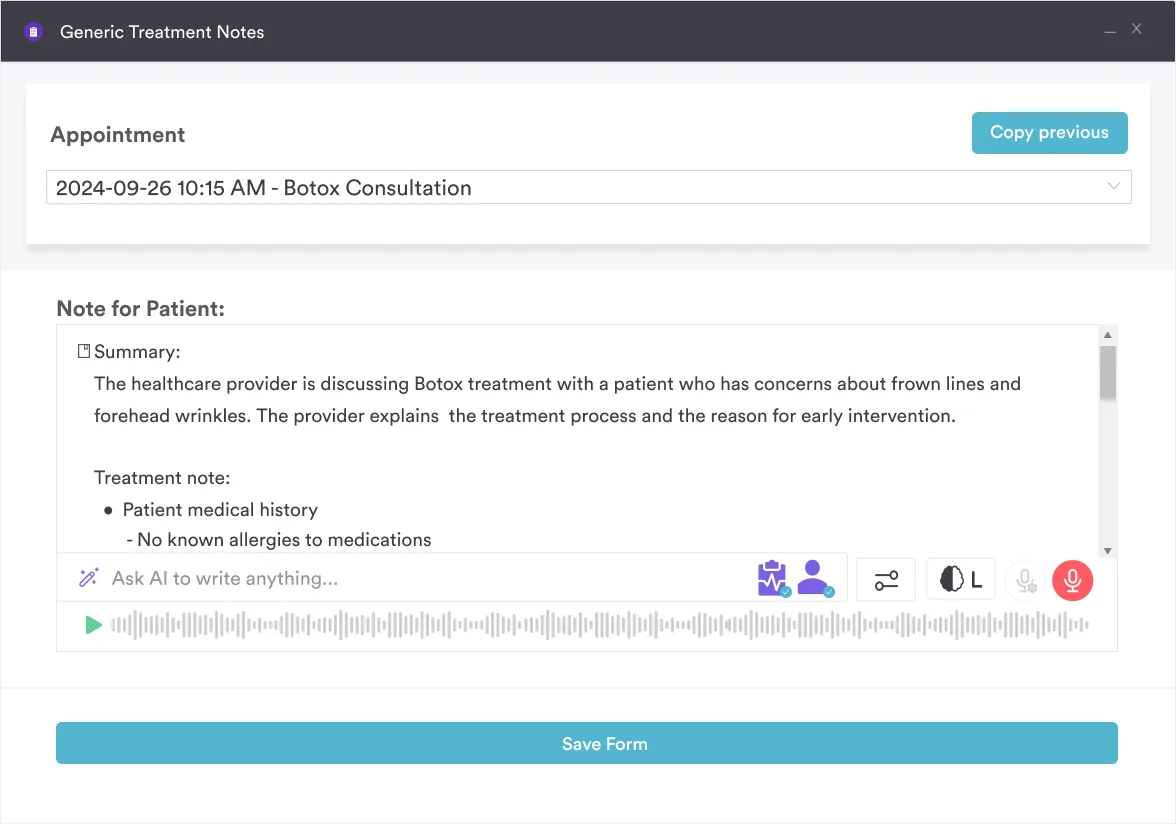
The conversation you have about the blanks can then be captured in the note itself. Pabau Scribe, our AI scribe, drafts the treatment note from the session. The follow-up questions you asked about trust or intimacy get documented without extra typing.

Pabau’s digital forms deliver the checklist before the session and file each dated response in the client record. Clinicians can compare a baseline against later check-ins without hunting through paper notes.

Use this checklist for what it is. It is a strengths inventory that gives couples a shared, dated picture of what is working across ten domains. In fact, it will not screen for risk, and it was never built to.
The clinical value sits in the blanks, and in the conversation that follows them. Pair the sheet with your own interview, your knowledge of coercive patterns, and a referral route you can use the same day. Administer it again in three to six months, and the comparison will tell you more than either sheet alone.
Download the template above to get started. Then book a demo to see how Pabau sends relationship checklists, files the responses, and keeps every check-in in one client record.

Need guidance on delivering difficult feedback in therapy? Safer clinical notes covers how to document sensitive relationship and abuse disclosures in a way that protects the client and strengthens your clinical record.
Looking for ways to track patient progress over time? Therapy practice management software helps clinicians store completed checklists, track session notes, and measure treatment outcomes-all in one secure clinical system.
Want to teach couples check-in skills outside of therapy sessions? Client portal lets you send the check-in checklist directly to your clients on a recurring schedule, so couples can practice the ritual independently.
A relationship checklist is a structured tool for reviewing relationship health across a set of domains. The template on this page lists 31 positive statements across 10 domains, from communication and trust to reflection and improvement. Partners check what is already the case for them, which gives clinicians a dated baseline instead of an unstructured narrative.
No. There is no scoring key, no rating scale, and no yes or no column. Every statement carries a plain checkbox that a partner either checks or leaves blank. The value comes from which domains stay empty, and from the conversation you have about them.
Green flags include open communication where both partners feel heard, mutual trust, and respect for each other’s boundaries. Add alignment on core values, emotional safety to express vulnerability, and conflict that gets resolved. Partners also support each other’s growth and keep friendships outside the relationship.
During therapy, administer the checklist at intake and again every three to six months to track progress. Outside therapy, couples can use a shorter weekly or monthly check-in of 15 to 20 minutes. That rhythm catches small issues before they become entrenched patterns.
Prioritize safety assessment over standard therapy. Document what was said, validate the client’s experience, and offer an immediate referral to domestic violence advocates. In the US that is the National Domestic Violence Hotline on 1-800-799-7233. Standard couples therapy is not safe when abuse is present, so refer to a clinician trained in abuse assessment.