Despina Petrushevska
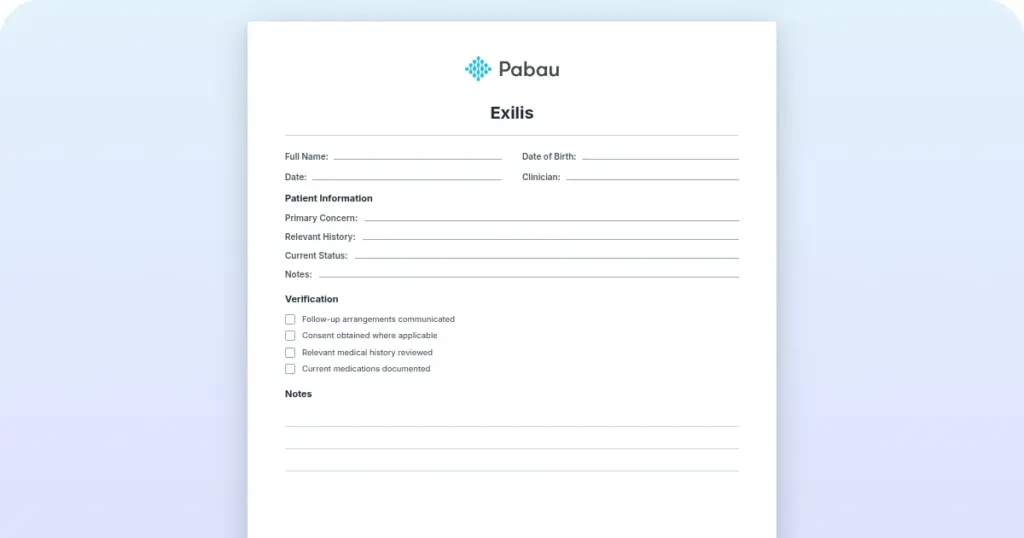
Exilis patient treatment record: Free PDF for RF sessions
An Exilis patient treatment record is the session log for BTL’s radiofrequ...

3
Last Updated: Oct 23, 2026
Free PDF 1 page, print-ready Clinician-reviewed
Download Your Free Hair Colouring Aftercare Template Hair Colouring Aftercare A comprehensive aftercare guide covering post-treatment washing protocols, product recommendations by colour type, heat styling precautions, scalp care, and colour-maintenance timelines to help clients preserve fresh colour and hair health. Download template Hair colouring aftercare is the set of post-treatment practices clients follow to preserve […]
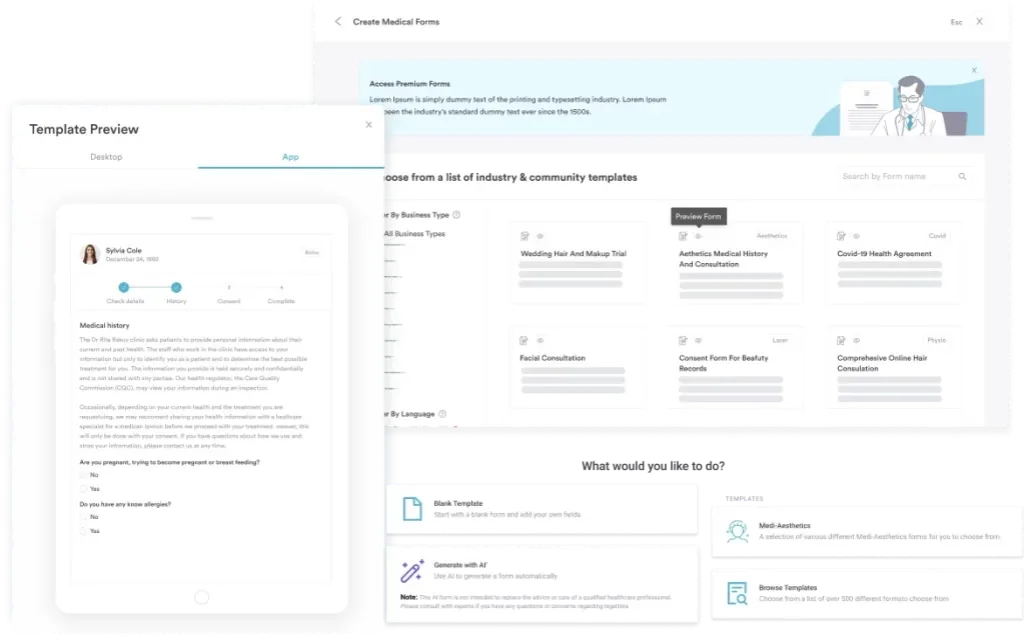
Upload this PDF, or any form you already use, and Pabau's AI Form rebuilds it with tick boxes, text fields and a signature. Attach it to the treatment once, and every patient gets it on time.
AI Form rebuilds the consent, history and aftercare forms you already use. You review each one, then publish.
Patients complete forms on their phone before they arrive, so the front desk stops retyping paper.
Every signed form is versioned and attached to the treatment record, ready when you need it.
Set how long a consent stays valid. Returning patients skip forms they have already signed.
Supports HIPAA and GDPR compliance AES-256 encryption 4.8 on G2 4.7 on Capterra Trusted by 4,000+ practices worldwide

Hair colouring aftercare protects colour longevity and hair health by managing cuticle integrity and pigment retention following chemical treatment.
Key guideline: wait 48-72 hours before shampooing, then wash no more than 2-3 times weekly using cool water and colour-safe products.
Common mistake: heat styling immediately after colouring depletes moisture and accelerates colour fade; deep conditioning weekly is essential.
Pabau’s digital forms and client portals let you send aftercare instructions automatically, track client compliance, and collect feedback post-service.
Hair colouring aftercare is the set of post-treatment practices clients follow to preserve colour vibrancy, maintain hair health, and prevent fading. Professional salons and aesthetic clinics provide digital aftercare forms or printed guides to ensure every client understands the critical care steps immediately after leaving the salon.
The first 72 hours after colouring are the most important. During this window, hair cuticles are still healing from the chemical processing, and colour molecules are settling into the cortex. Improper care-washing too early, using hot water, or applying heat-can reverse weeks of professional results in days.
This guide covers everything salons need to know about hair colouring aftercare: protocols by treatment type, product recommendations, client instruction frameworks, and how to deliver aftercare advice that reduces callbacks and boosts client satisfaction and retention.
A hair colouring aftercare template is a structured document-physical or digital-that salons hand to clients immediately after a colour service. It outlines step-by-step care instructions for the hours and weeks following treatment, explaining why each step matters and when to schedule the next appointment.
Effective aftercare templates serve three purposes: they protect the salon’s reputation by setting realistic client expectations, they extend the time between colour touch-ups (increasing client lifetime value), and they demonstrate professional care standards that comply with salon industry best practice guidelines and UK trading standards.
Hair colouring aftercare covers multiple treatment types: permanent colour (where ammonia opens the cuticle and deposits lasting pigment), semi-permanent colour (which gradually fades over 24-28 shampoos), balayage and highlights (where selective sections receive stronger processing), and bleaching (which requires the most intensive aftercare due to cuticle damage). Each type demands specific post-colour protocols.
Delivering aftercare instructions is as critical as the colour service itself. Here are five operational steps for integrating a client onboarding template with aftercare details into your salon workflow:
Hair colouring aftercare templates are essential for any salon or aesthetic clinic offering hair colour services. This includes traditional hair salons, medical aesthetic clinics offering advanced colour treatments, hair transplant clinics managing post-grafting care, and spa facilities with integrated salon services.
The template is most valuable in clinics where hair clinic software manages client records and service history. Staff can attach digital aftercare forms to client profiles, track whether clients receive and open aftercare emails, and identify patterns of early re-booking (which may signal colour fading). Multi-location salon groups benefit especially, as a standardised template ensures consistent aftercare messaging across all locations. A wellness practice offering repeat treatments needs the last visit detail available at the next booking. Salons that also run skin treatments can pair this template with an esthetician client intake form to capture history and allergies upfront.
If you are comparing platforms, this guide to the best aesthetic clinic software weighs charting, photos, and payments side by side.
Reduces client callbacks and complaint complaints. Clients who follow documented aftercare experience longer-lasting colour results, reducing the number of dissatisfaction calls and rushed re-booking requests. Setting expectations upfront prevents misunderstandings.
Extends time between colour touch-ups. Clients who use colour-safe products and follow washing frequency guidance keep their colour vibrant 4-6 weeks longer than clients who don’t receive aftercare guidance. Longer intervals between touch-ups = higher perceived client lifetime value and stronger retention metrics.
Demonstrates professional salon standards. A printed or digital aftercare template signals that your salon invests in client outcomes, not just transaction-based services. This professionalism differentiates you from competitors and justifies premium pricing.
Supports staff consistency. Documented aftercare ensures every staff member delivers the same core messages. Newer stylists or salon teams in multiple locations maintain brand consistency by following the template framework.
Improves compliance and documentation. If clients sustain an allergic reaction or hair damage post-colour, your documented aftercare template proves you provided proper care instructions. This protects the salon against liability claims and demonstrates adherence to UK trading standards and professional salon guidelines.
Create a tiered aftercare framework: one version for permanent colour, one for semi-permanent, one for bleach-based treatments. Clients receiving balayage or highlights have different needs than those receiving full-head permanent colour. Tailored guidance improves perceived professionalism and outcome satisfaction.
One of the most valuable sections of a hair colouring aftercare template is product guidance specific to the colour the client received. Generic advice (“use colour-safe shampoo”) doesn’t help clients navigate the pharmacy aisle. Specific product recommendations accelerate aftercare compliance.
Clients need a clear timeline to follow. The first week post-colour is critical; the aftercare template should break it into phases.
Heat styling is the second-biggest threat to colour longevity after premature shampooing. Blow drying, flat irons, and curling irons open the cuticle and accelerate pigment loss. The template should explicitly forbid heat styling for at least one week post-colour, then restrict it to low heat with protective products thereafter.

Pabau’s digital forms let you send customised aftercare instructions, track client compliance, and manage follow-up appointments automatically-so every client gets the care protocol they need.

Colour processing can temporarily disrupt scalp pH balance and natural oil production. Many clients experience dry, itchy scalps 2-3 days post-colour because the processing stripped protective oils. The aftercare template should address this.
Recommend skipping one wash cycle per week to allow sebum (natural scalp oils) to repair and rehydrate. Use a gentle scalp massage during shampooing to stimulate circulation. If itching occurs, suggest a hydrating scalp mask or leave-in scalp conditioner rather than medicated dandruff products (which can fade colour or disrupt pH further).
For clients with sensitive scalps or a history of allergic reactions, remind them to patch-test any new aftercare products 24 hours before full application. This is especially important if they are switching from their usual product to a colour-safe variant they’ve never used before.
Professional hair colouring aftercare is the bridge between the salon service and lasting client outcomes. A clear, printable or digital template ensures every client-regardless of when they visit or which stylist serves them-receives consistent guidance on protecting their colour investment.
Integrating an aftercare template into your salon workflow signals professionalism, extends client lifetime value through longer colour longevity, and protects your salon from liability claims. Book a demo to see how Pabau’s forms and client portals simplify aftercare delivery.

Want to streamline client onboarding with aftercare? Best software for salons and spas compares platforms with strong form and client portal capabilities.
Want to track client wellbeing over time? Wellness journal template covers mood logs, sleep tracking, nutrition records, and weekly self-reflection prompts.
Looking to cut down on no-shows? Beauty salon booking software compares platforms that automate scheduling and reduce missed-appointment costs.
Hair colouring aftercare is the set of post-treatment care practices clients follow after a professional colour service to preserve colour vibrancy, maintain hair health, and prevent fading. It includes washing protocols, product recommendations, heat-styling restrictions, and scalp care guidance for the weeks following colour treatment.
Wait at least 48 hours for semi-permanent colour and 72 hours for permanent colour before shampooing. During this window, colour molecules are settling into the hair cortex; shampooing too early removes unset pigment and opens the cuticle, undoing colour longevity. A 72-hour wait is ideal for maximum colour lock-in.
Shampoo colour-treated hair no more than 2-3 times per week using cool water and colour-safe shampoo. Overwashing strips natural oils and accelerates colour fade. Between washes, use dry shampoo to absorb excess oil and extend the interval. Weekly deep conditioning treatments replace moisture lost during colour processing.
Avoid heat styling tools (blow dryers, straighteners, curling irons) for at least one week post-colour. Heat opens the hair cuticle and accelerates colour pigment loss. After one week, use heat styling sparingly and always apply a heat-protectant product first. Air-drying is the safest option for colour-treated hair.
Use colour-safe shampoo and conditioner formulated to seal the cuticle and preserve pigment. For specific colour types: warm tones benefit from colour-depositing shampoos; cool tones (ash, silver, violet) benefit from toning shampoos applied weekly to neutralise brassiness; brunettes benefit from ash-toned conditioners. Weekly deep conditioning treatments are essential for all colour types.