Treatment summary
A treatment summary is a written record of what care was delivered during an epi...

1
Last Updated: Oct 16, 2026

An EKG practice test is a structured assessment of rhythm strip identification and interpretation skills required for ACLS, PALS, nursing certification, and paramedic (NREMT) exams.
Master the 5-step systematic approach: determine rate, assess regularity, analyze P waves, measure PR interval, and evaluate QRS complex. This method works for every rhythm on any exam.
Normal sinus rhythm, atrial fibrillation, heart blocks, ventricular fibrillation, and ventricular tachycardia are the most frequently tested rhythms.
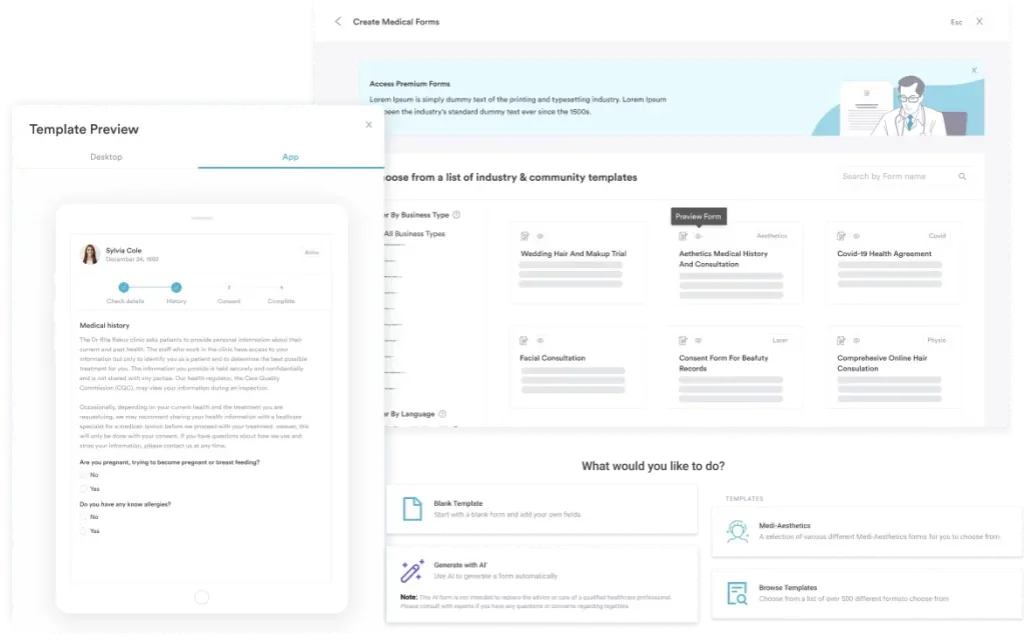
Pabau’s digital forms and client records let practices keep EKG interpretation documentation organized and HIPAA-compliant in one system.
A comprehensive EKG practice test including rhythm strip identification questions, systematic interpretation approach, answer key with explanations, and normal EKG values reference table.
Download templatePreparing for your EKG certification exam, ACLS recertification, or PALS provider course? A systematic approach to reading rhythm strips is the foundation, and this EKG practice test is the tool that builds it. Rhythm strip identification separates confident clinicians from those who second-guess themselves during critical moments.
Whether you’re a nurse, paramedic, medical assistant, or cardiac monitor technician, mastering cardiac rhythm recognition is non-negotiable. This guide covers the 5-step systematic approach to reading every rhythm strip you’ll encounter. It introduces the major rhythm categories tested on certification exams. You’ll also get the downloadable EKG practice test, complete with an answer key, explanations, and a printable normal values reference card.
An EKG practice test is an educational assessment tool that presents rhythm strips and asks you to identify the cardiac rhythm. Each strip shows 6 to 12 seconds of a patient’s heart’s electrical activity recorded on graph paper. Your job: determine the rate, assess whether the rhythm is regular or irregular, analyze the waves, and arrive at a diagnosis. This mirrors exactly what you’ll do on certification exams for ACLS (Advanced Cardiac Life Support) and PALS (Pediatric Advanced Life Support). The same skill is tested on NREMT (National Registry of Emergency Medical Technicians) exams, nursing boards, and medical assistant certification.
EKG practice tests serve three clinical purposes. First, they build speed: you learn to recognize patterns in seconds, which is critical during cardiac emergencies. Second, they reinforce the systematic approach so you never miss a subtle clue, like a hidden P wave. Third, they show you which rhythms you haven’t mastered yet, so you can study those before the real exam.
The downloadable format lets you practice offline, print strips to review with colleagues, and build a personal study library.
Every skilled clinician follows the same sequence when interpreting a rhythm strip: rate, regularity, P waves, PR interval, QRS complex. Following this order prevents you from jumping to conclusions. A wide QRS might look like ventricular tachycardia until you check the PR interval and realize it’s SVT with aberrancy.
Apply this framework to every strip on your practice test. The discipline of systematic interpretation is what separates high scores from median performance.
Bookmark this table and reference it during every practice test. These normal values are the baseline against which every abnormality is measured.
All certification exams test rhythms across five major categories. Understanding each one, and its key discriminating features, is how you move from guessing to diagnosing with confidence.
Your downloadable EKG practice test includes 12-15 sample rhythm strips with multiple-choice answers and full explanations. Each question presents a 6-second rhythm strip and asks you to identify the rhythm and justify your answer using the 5-step approach.
This builds both speed and reasoning. Work through the test twice: once under timed conditions (1-2 minutes per strip), then again reviewing every explanation to strengthen your weaker categories.
How to use the practice test: Print the PDF. Use a pencil to write your answer before flipping to the answer key. Score yourself honestly. For any missed rhythm, re-read the explanation, then study 2-3 additional examples of that same rhythm from other sources.
The downloadable EKG practice test PDF contains everything you need to study independently or with a group:
This practice test is designed for healthcare professionals preparing for rhythm recognition certification or recertification:
Passing an EKG exam is about consistency, not luck. These strategies separate high performers from those who need retakes:
Expand your learning with these trusted resources:
Most practices track staff certifications and continuing education in a spreadsheet or a folder of paper certificates. That’s separate from the records where clinical findings get logged. That split makes audits slower than they need to be.
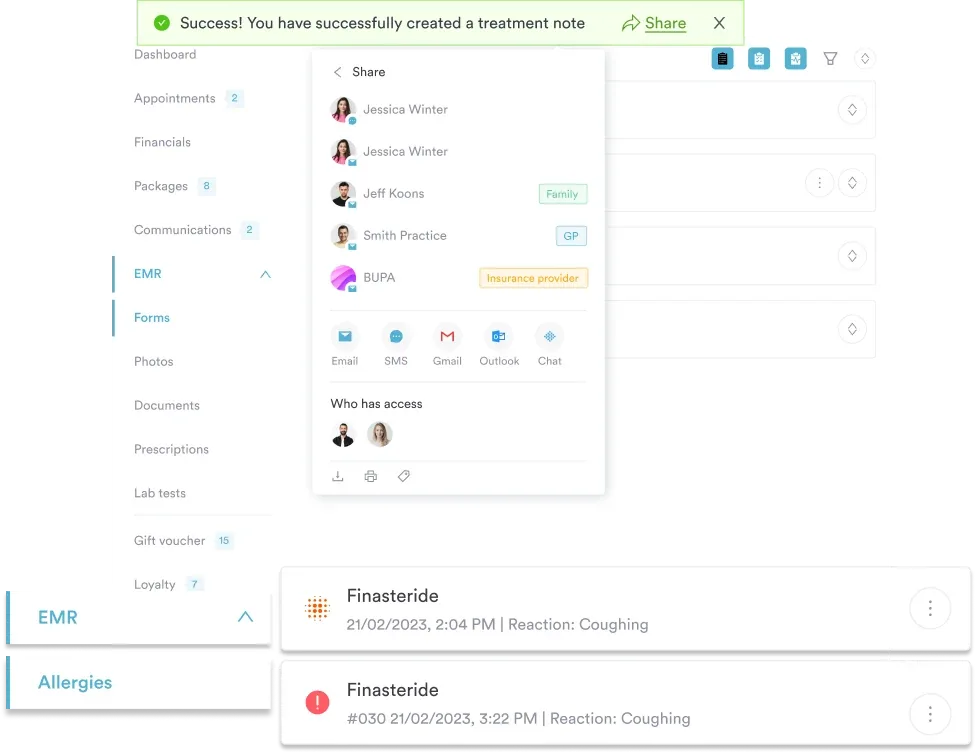
Practice management software like Pabau keeps certification dates, renewal deadlines, and competency notes on each staff member’s profile. That sits alongside the digital forms and treatment notes where an EKG interpretation gets documented in the client record. One system replaces the spreadsheet and the paper folder.
That matters most during an audit. A compliance lead can pull a nurse’s ACLS renewal date and a documented cardiac assessment from the same record, instead of searching two disconnected systems. Every entry stays HIPAA-compliant.

Pabau’s digital forms and client records track EKG competency checks and certification dates in one HIPAA-compliant system, so compliance leads skip the spreadsheet hunt.

Rhythm recognition rewards repetition, not memorization. Run through the practice test under timed conditions first, then review every explanation, especially for rhythms you missed.
Heart blocks and ventricular rhythms carry the most test weight, so give them extra study time before moving to the rarer categories.
Once you’re confident in the five-step approach, that same discipline carries over into daily practice, where accurate documentation matters as much as accurate interpretation. Book a demo to see how Pabau helps practices track staff certifications and cardiac documentation in one system.
EKG and ECG are the same test. EKG is the American abbreviation (electrocardiogram); ECG is the British/international abbreviation (electrocardiogram). Both record your heart’s electrical activity on a 12-lead strip. Use whichever abbreviation is standard in your region or certification exam.
ACLS and PALS exams typically include 10-15 rhythm identification questions (out of 25-50 total). NREMT cognitive exams weight cardiac rhythms at 15-20% of the test. Nursing board exams vary by state but include rhythm recognition as a core competency. Your specific exam format may vary, so check with your certifying body.
Yes. Download the EKG practice test PDF above at no cost. The downloadable template includes the practice questions, answer key, explanations, and reference card. Many clinics also provide staff with access to practice exams through their learning management system. Ask your employer about additional study resources.
Master the 5-step systematic approach first (rate, regularity, P waves, PR interval, QRS complex). Then practice rhythm recognition daily using downloadable tests and flashcards. Study the most common tested rhythms (normal sinus, atrial fib, heart blocks, ventricular rhythms) first. Take full-length practice exams under timed conditions 3-5 days before your real exam to build confidence and speed.
Normal sinus rhythm (15-20% of questions), atrial fibrillation (15%), sinus bradycardia/tachycardia (10%), heart blocks (20-25%), and ventricular rhythms including VT and VFib (15-20%). The remaining 10% covers less common rhythms like junctional rhythms and SVT. Focus your study time proportionally. Spend twice as long on heart blocks and ventricular rhythms, since they carry the highest test frequency.
Three methods: (1) Large-box method: count the large boxes between two R waves, divide into 300. (2) Small-box method: divide into 1,500. (3) 6-second method: count R waves in a 6-second interval (marked on most EKG paper), multiply by 10. Practice all three methods. Exams may not label the intervals, so you need to pick the fastest one for each strip.