CPT code 93503: Swan-Ganz catheter billing and modifiers
CPT code 93503: Official descriptor and procedure overview In the AMA CPT code s...

Last Updated: Oct 23, 2026
C1876 is the HCPCS Level II code for stent, non-coated/non-covered, with delivery system.
The code covers the bare metal stent and its delivery system as one billable unit. It only appears on claims paid under the Outpatient Prospective Payment System (OPPS). Drug-eluting and covered stents carry different codes, so the device label decides which code you report.
Let Pabau's smart automation suggest the right codes, reduce claim denials, and keep your practice compliant—effortlessly.
Automate repetitive tasks and focus on what matters most—your patients.
Reduce coding errors and ensure compliance with the latest regulations.
Clean claims, fewer denials, and faster reimbursements.
Powerful insights and reporting to help your practice thrive.
HIPAA compliant SOC 2 certified GDPR-compliant Trusted by 4,000+ clinics worldwide

HCPCS code C1876 describes a stent, non-coated/non-covered, with delivery system. It is a Level II device code, reported only by hospital outpatient departments billing Medicare under OPPS.
C1876 may qualify for transitional pass-through payment, which pays the device separately from the Ambulatory Payment Classification bundle. Verify that status in the CMS Addenda each year.
Every claim pairs C1876 with the CPT code for the procedure performed and an ICD-10-CM code for the vessel treated. Local Coverage Determinations decide which diagnoses qualify.
Practice management software like Pabau keeps treatment notes, device details, imaging, and signed consent in one patient record, ready for any documentation request.
C1876 is a facility-side billing code. Physician offices cannot report it. The code belongs on the UB-04 claim form submitted by the hospital outpatient department that supplied the stent. Billers who put a C-code on a CMS-1500 claim get an immediate denial.
The non-coated, non-covered stent described by C1876 is usually called a bare metal stent. Clinical procedures where it applies include:
Per CMS billing and coding article A57590, the code governs non-coronary vascular stent applications. Coronary stents use a separate set of HCPCS codes. Other C-codes work the same way:
Payment for C1876 under OPPS follows the Ambulatory Payment Classification (APC) assigned to the procedure it is billed with. When pass-through status is active, a separate device payment applies on top. CMS updates OPPS rates annually in the Final Rule, effective each January 1.
For current payment amounts, use the OPPS Addendum B published for the applicable calendar year. CMS posts it on the hospital outpatient payment page with each Final Rule. Several factors then determine what the facility actually receives:
Reading Addendum B alongside AAPC’s HCPCS reference gives the clearest picture of the current payment status for C1876. Check both for the year on the claim rather than the year you last billed the code.
Transitional pass-through payment is how CMS encourages adoption of new medical technology. When a device receives pass-through status, Medicare pays an amount above the standard APC rate to offset its cost. For C1876, that status is the difference between a separate device payment and none.
Devices are not the only pass-through category. Drugs and biologicals run on a parallel track. A facility billing device and drug codes such as J0395 checks two sets of addenda each year. Keeping one dated list of payment statuses is faster than rechecking each code at claim time.
Miscellaneous codes are easy to mishandle, and medical practice management software keeps their documentation attached and auditable.
C1876 is a device code, not a procedure code. It has to sit on the claim next to the CPT code describing the intervention. The CPT code drives the APC grouping, while the device code captures the implant cost. A C1876 line with no procedure code rejects as incomplete.
The exclusions built into 37236 catch people out. Iliac and femoral stenting for occlusive disease belongs in the 37220 to 37235 range, and carotid stenting belongs in 37215 or 37216. Verify each pairing against OPPS Addendum B for the claim year, then confirm any restriction with your MAC.
Medicare requires a medically necessary diagnosis code on every C1876 claim. The ICD-10-CM code has to support the clinical indication for the stent placed. Coverage sits with the Local Coverage Determinations (LCDs) issued by each Medicare Administrative Contractor, so accepted codes vary by region.
The table below lists diagnoses commonly accepted across major LCDs for non-coronary vascular stent procedures.
Confirm the LCD for your MAC jurisdiction before submitting. Traumatic vascular diagnoses work the same way. S25509A and S35492S each name one specific vessel, and the operative note has to describe that vessel.
Much of the supporting evidence starts outside the hospital. Referring physicians in private practice and metabolic health clinics hold the duplex ultrasound and the risk-factor history the LCD asks for. Getting copies into the hospital record before submission saves a records request later.
Hospital outpatient claims for C1876 go out on the UB-04 claim form. The bill type code and the revenue code both have to be right for the claim to process under OPPS. An error in either field sends the claim down the wrong payment pathway or denies it outright.
Per CMS article A57590, HOPD claims for non-coronary vascular stents need these UB-04 fields to line up with the C1876 line item. A mismatch between the bill type and the setting stops OPPS logic from working. Use a 12x inpatient bill type and the separate device payment disappears.
A C1876 claim needs a clinical record that substantiates medical necessity for the stent procedure. Auditors reviewing HOPD vascular device claims look for six specific elements.
High-volume vascular teams get more out of digital intake and documentation forms. Capturing device details at implantation keeps the label and the implant log out of the lost-paperwork pile. Structured patient record management puts the operative note and the device invoice in the same file before the claim goes out.
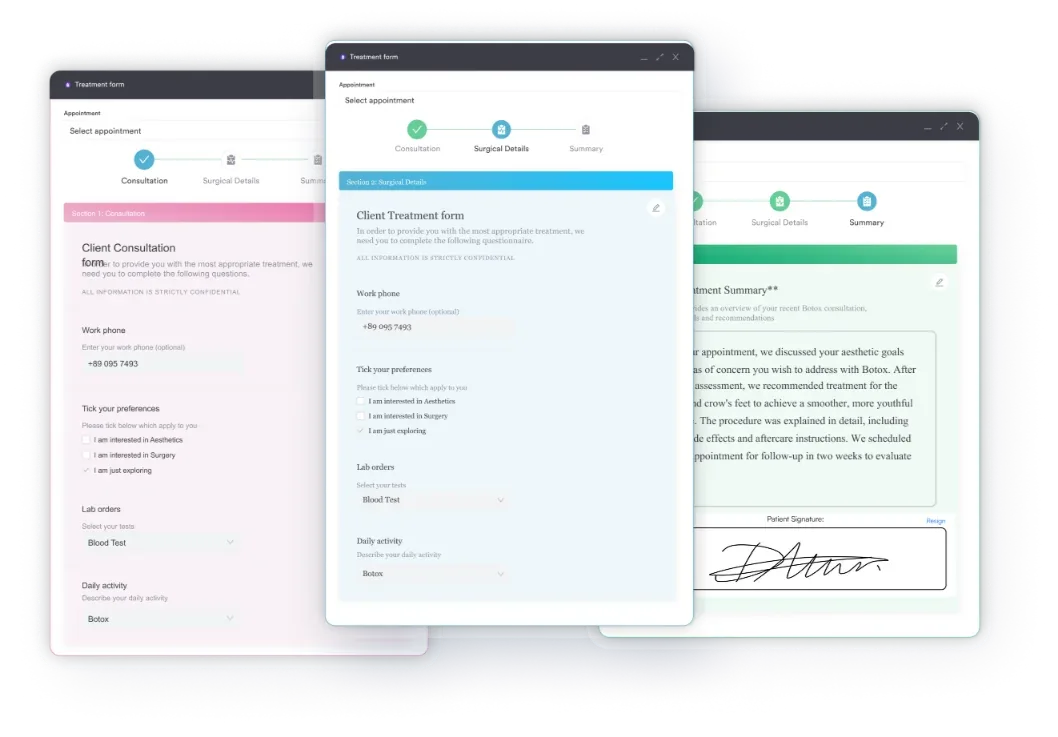
Keep the whole packet for as long as state and Medicare rules require. A signed HIPAA release form is what lets you hand those records to another party.
Build a device implant checklist into the procedure room workflow. At the moment of implantation, a nurse or surgical technician attaches the device label sticker directly to the operative record. Auditors look for that sticker first, because it is the fastest proof that the stent was non-coated and non-covered.
CMS can package the cost of a device into the primary procedure’s APC payment instead of paying it separately. Three things decide which way C1876 goes: the OPPS Final Rule for that year, the code’s pass-through status, and the APC on the primary procedure.
OPPS Addendum B lists a payment indicator for every HCPCS code, C1876 included. That indicator tells billers directly whether the code is paid separately or packaged. Check it annually instead of carrying last year’s billing assumptions forward.
The evidence behind a stent claim is usually scattered. The operative note sits in one system, the device label in a paper folder, and the duplex ultrasound report in an imaging archive. When a payer asks for proof of medical necessity, somebody has to go and assemble all three.
Practice management software like Pabau keeps that clinical record in one place. Treatment notes, uploaded imaging reports, device details, and signed consent all sit against the patient file. Pabau’s claims management software covers insurance billing for private practices and consultants, rather than hospital facility claims. When a claim on this code comes back unpaid, the denial reason codes on the remittance name the cause. An itemized superbill keeps the required fields in one place: dates, codes, charges and provider identifiers.
So the facility’s UB-04 still goes out through the hospital’s own billing system. What a practice gains is a record it can produce on demand. Interventionalists and referring teams working across several sites can pull the note, the device details, and the imaging from one patient file.
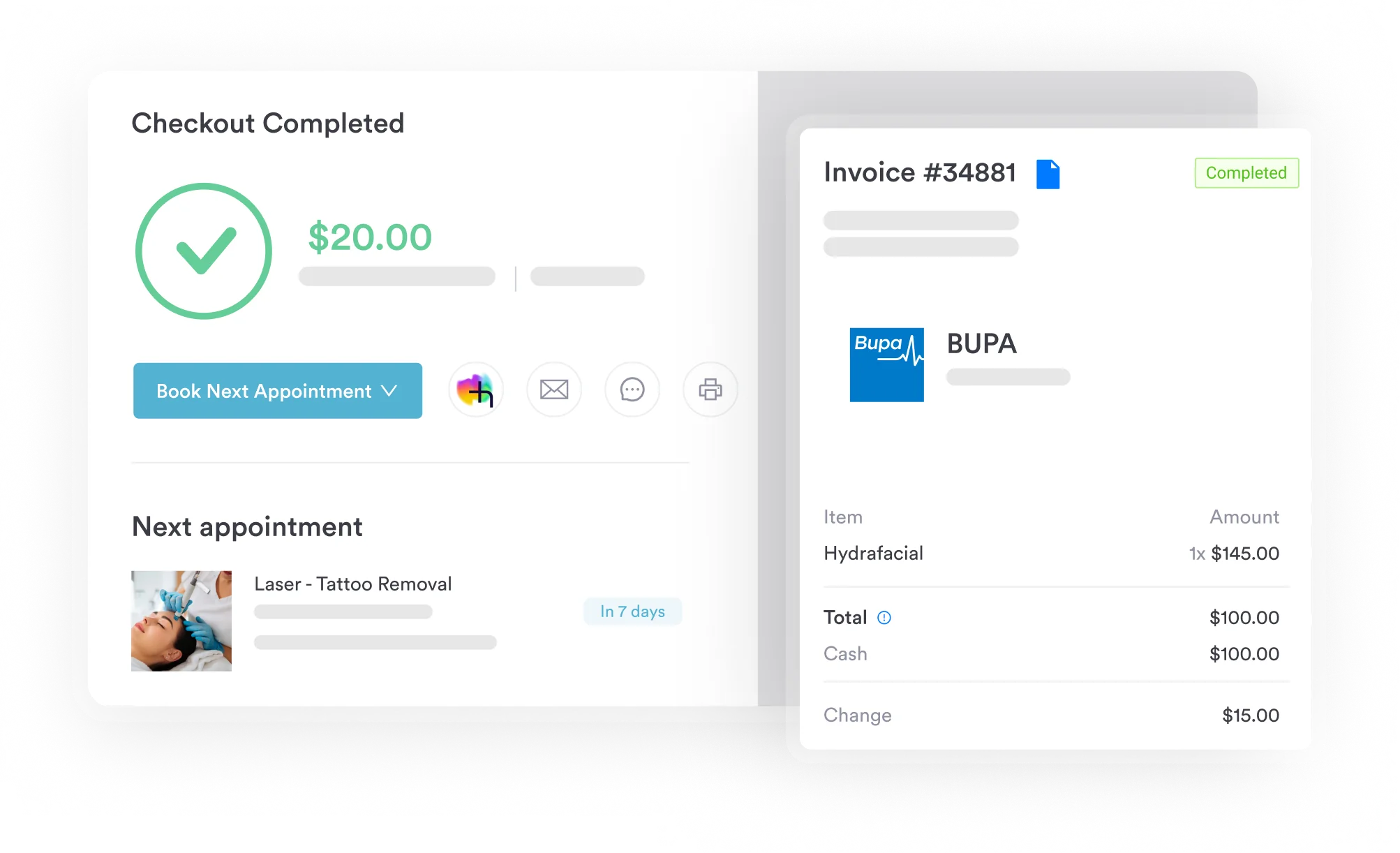

Pabau holds treatment notes, device details, imaging, and signed consent in one patient record. Your team can produce the documentation behind any procedure in seconds, instead of hunting through three systems.

Choosing C1876 is the easy part. Denials come from what surrounds it: a pass-through status that lapsed quietly, a CPT pairing the descriptor rules out, or a device label nobody kept.
Two habits cover most of that. Read Addendum B every January before you bill the device separately, and check that the operative note names the stent as non-coated and non-covered. The rest is filing discipline.
Practices that keep procedure documentation in one system spend far less time reconstructing it a year later. Book a demo to see how Pabau holds treatment notes, device details, and consent in a single patient record.

Billing other Level II HCPCS supply codes? B4083 walks through how a supply code is documented and reported.
Reporting drug codes alongside device codes? J7515 shows how units and dosage drive a J-code claim.
Need imaging that holds up under review? G0235 covers the documentation that decides whether an imaging claim is paid.
Billing equipment as well as implants? E0205 sets out how a durable medical equipment code is coded and supported.
Coding osteoporosis without a fracture? Osteoporosis coding guide covers the forms of osteoporosis that are neither age-related nor fracture-linked.
HCPCS code C1876 is a Level II HCPCS device code for a stent, non-coated/non-covered, with delivery system. Only hospital outpatient departments report it, under Medicare’s Outpatient Prospective Payment System (OPPS). It covers a bare metal stent and its delivery system as a single billable unit, placed in a non-coronary vessel.
C1876 may qualify for transitional pass-through payment under OPPS. That status runs for roughly two to three years and has to be verified each year in CMS OPPS Addendum B or Addendum D1. Once the pass-through period ends, the device cost is packaged into the APC payment for the primary procedure.
The CPT codes most often paired with C1876 include 37238 for an initial venous stent and 37215 for carotid stenting. Add-on codes 37237 and 37239 cover additional vessels. Code 37236 applies to renal, mesenteric, or subclavian arteries, because its descriptor excludes lower-extremity arteries treated for occlusive disease. Iliac and femoral occlusive-disease stenting is reported with 37220 to 37235 instead.
Yes. CMS can package C1876 into the primary procedure’s APC payment instead of paying it separately. Whether separate payment applies depends on the current year’s OPPS Final Rule, whether pass-through status is active, and whether the procedure triggers a composite APC. Review CMS OPPS Addendum B each January for the payment indicator assigned to C1876.
Coated stents, meaning drug-eluting or covered devices, carry different HCPCS codes from non-coated stents. CMS separates the device categories when it sets pass-through eligibility and APC assignment. C1876 applies only to non-coated, non-covered bare metal stents supplied with a delivery system. Using it for a drug-eluting or covered stent is incorrect code selection and may trigger a claim correction or an audit.
You need the operative report confirming the stent type, a device label or manufacturer invoice identifying it as non-coated/non-covered, and a signed physician order. Add the imaging or catheterization findings that support medical necessity. The hospital’s implant log with the lot number and implant date is also required, along with chart evidence for the ICD-10-CM code submitted.