CPT code 93503: Swan-Ganz catheter billing and modifiers
CPT code 93503: Official descriptor and procedure overview In the AMA CPT code s...

Last Updated: Oct 23, 2026
H5240 is the CCSD code for banding of haemorrhoids, also called rubber band ligation. It covers placing elastic bands on internal haemorrhoids through a proctoscope, usually as an outpatient or day-case procedure. The descriptor is plural, so one charge normally covers every band placed in a session.
The code sits in CCSD chapter 11, section 11.6.0 Rectum/Anus. CCSD, short for Clinical Coding & Schedule Development, publishes the schedule that UK private insurers such as Bupa, AXA Health and Aviva use. Sclerosant injection (H5230), haemorrhoidectomy (H5100) and haemorrhoidal artery ligation (L7032) are unacceptable combinations with H5240.
Let Pabau's smart automation suggest the right codes, reduce claim denials, and keep your practice compliant—effortlessly.
Automate repetitive tasks and focus on what matters most—your patients.
Reduce coding errors and ensure compliance with the latest regulations.
Clean claims, fewer denials, and faster reimbursements.
Powerful insights and reporting to help your practice thrive.
HIPAA compliant SOC 2 certified GDPR-compliant Trusted by 4,000+ clinics worldwide

CCSD code H5240 covers banding of internal haemorrhoids, better known as rubber band ligation, carried out through a proctoscope.
The descriptor is plural, so one H5240 normally covers every band placed in a session. Confirm the billing unit with the insurer.
AXA Health lists 12 codes as unacceptable with H5240, including sclerosant injection (H5230), haemorrhoidectomy (H5100) and artery ligation (L7032).
The operative note must name banding and record the haemorrhoid grade, the number of bands and the positions treated.
Pabau, the practice management platform we build, holds H5240 in your service list with a fee per insurer and tracks each claim to payment.
CCSD code H5240 is the private-sector procedure code for banding of haemorrhoids. Surgeons usually call it rubber band ligation, or RBL. The code sits in chapter 11 of the CCSD schedule, in section 11.6.0 Rectum/Anus.
CCSD stands for Clinical Coding & Schedule Development. The CCSD Group publishes the schedule that UK private medical insurers use to pay consultant procedures. It does not set fees, so each insurer decides how it pays the code. The neighboring Rectum/Anus codes have their own entries in our CCSD code guides.
The table below holds the facts a coder needs before raising an H5240 claim.
Banding treats internal haemorrhoids, the ones that sit above the dentate line. Surgeons use it mainly for grade I and II haemorrhoids, and for some grade III. The surgeon passes a proctoscope, draws the haemorrhoid into an applicator and fires a tight elastic band around its base.
The banded tissue loses its blood supply and falls away over the following days. The lining above the dentate line has little pain sensation, so most patients are banded without a general anesthetic.
One H5240 charge normally includes:
Insurers expect these consumables to sit inside the procedure fee. Check the insurer’s schedule before you invoice any of them separately.
CCSD flags pairs of codes that should not be billed together. Its pages for H5100, H5230 and L7032 each list H5240 among their unacceptable combinations. AXA Health’s specialist code search goes further and lists 12 codes as unacceptable with H5240.
Sorted by type, the AXA Health list falls into three groups. Ten of the 12 are other haemorrhoid treatments or rectal procedures.
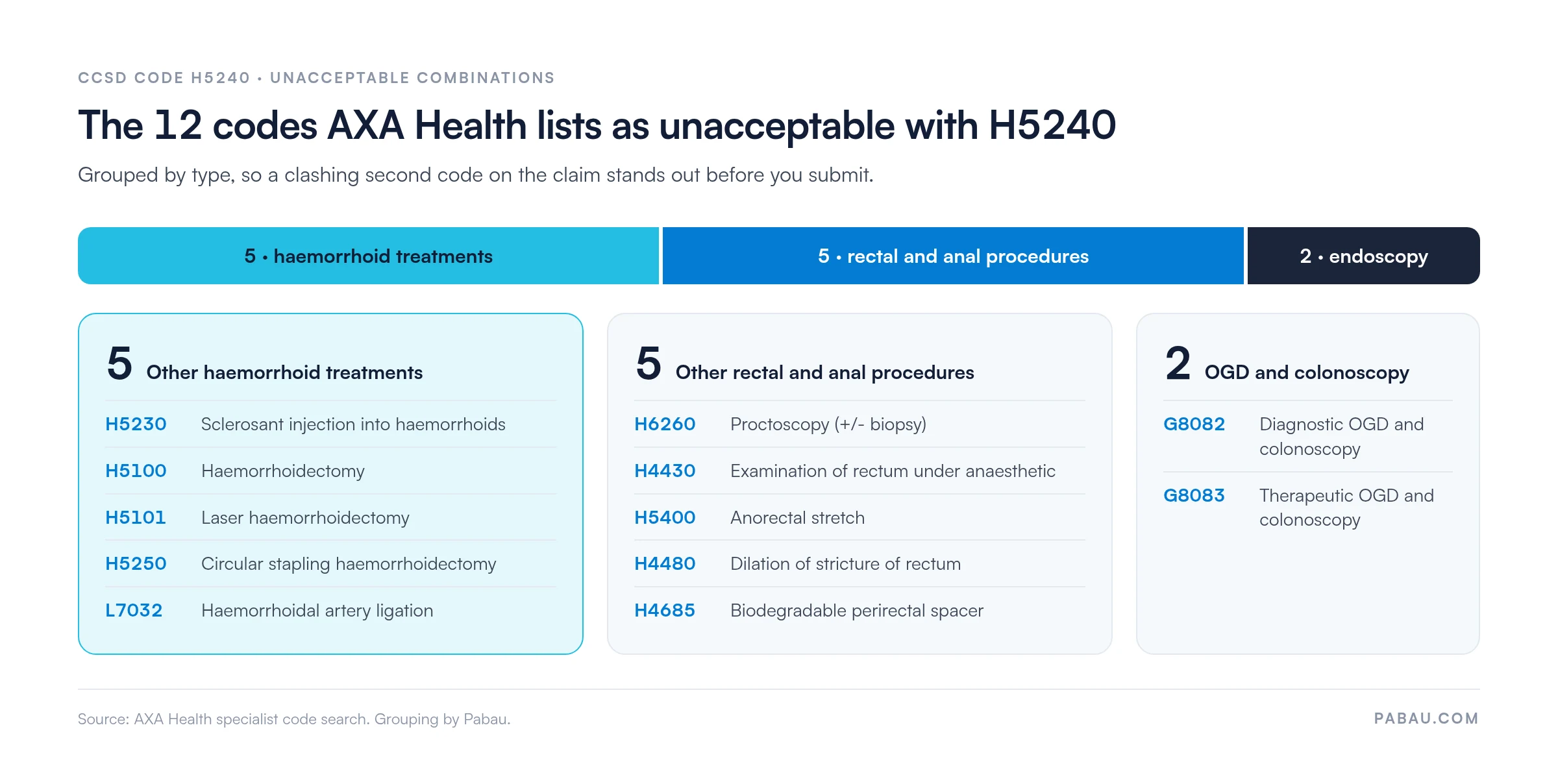
The full list, with each official descriptor, is below.
Each insurer decides whether it adopts CCSD’s combination rules. So read the patient’s own insurer list whenever a claim carries a second rectal or endoscopy code.
Several haemorrhoid treatments sit side by side in section 11.6.0. The operative note decides which one you bill, never the name on the booking.
Sometimes a note only says the haemorrhoids were treated. In that case, send it back to the surgeon before you code. Guessing from the procedure name is how banding ends up billed as an injection.
Pre-authorization rules for H5240 vary by insurer and by policy. Where an insurer needs it, a claim without an authorization number is likely to be declined. The table points to what each insurer publishes for providers.
These schedules change during the year. Use the version in force on the treatment date, not a copy saved months ago. Our Bupa CCSD codes guide explains how Bupa’s schedule is organized.
The CCSD technical guide expects the procedure record to support the code claimed. For H5240, the note must show that bands were applied, rather than an injection or an excision.
Every H5240 operative note should record:
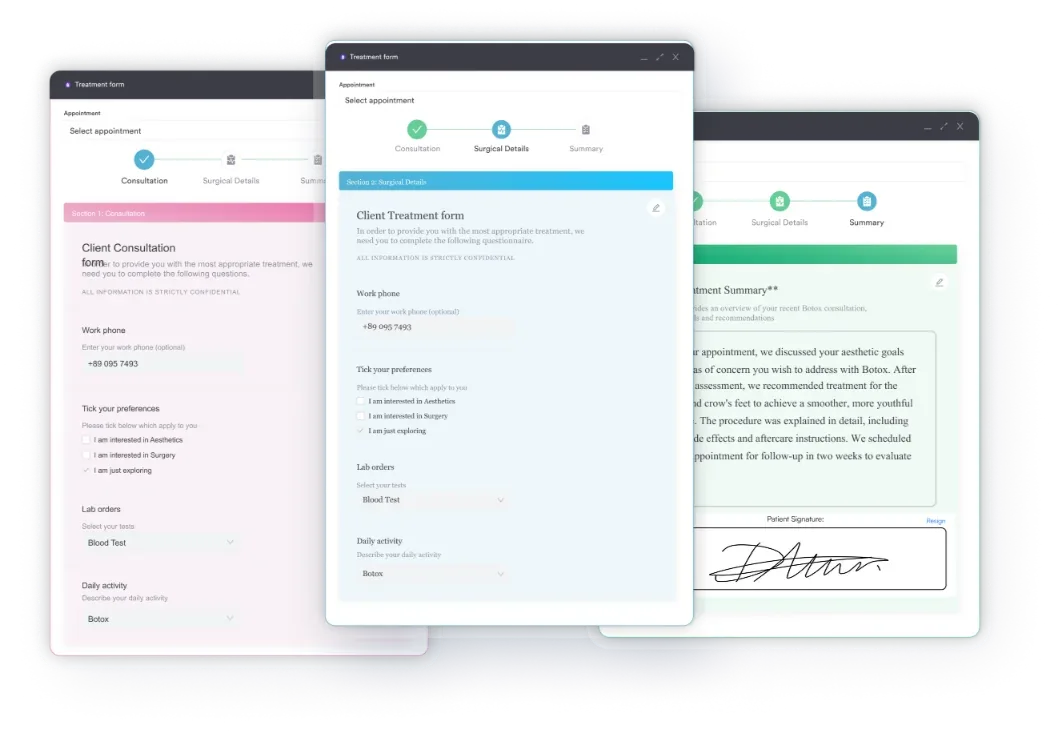
Work through these steps in order for every H5240 claim.
H5240 claims come back for a short list of reasons, and two of them start in the operative note. The table pairs each one with its fix.
Tick each line before the claim leaves the practice.
Banding often takes more than one visit, because surgeons limit how many bands they place at once. Each visit is a separate date of service, so each one gets its own H5240 claim. Never fold two sessions into one claim line.
The other common mistakes are just as easy to avoid:
If the surgeon plans a second banding session, note the planned date in the first record. The insurer can then match the second claim to that plan instead of querying it as a duplicate.
Many H5240 denials trace back to details stored in different places. The authorization sits in an email, the fee in a spreadsheet and the note in a separate clinical system.
In Pabau, you add H5240 to your service list and set a fee for each insurer. The operative note, consent form and authorization number sit on the same patient record as the invoice. Its claims management for practices then tracks each claim through to payment, so overdue claims stand out early.
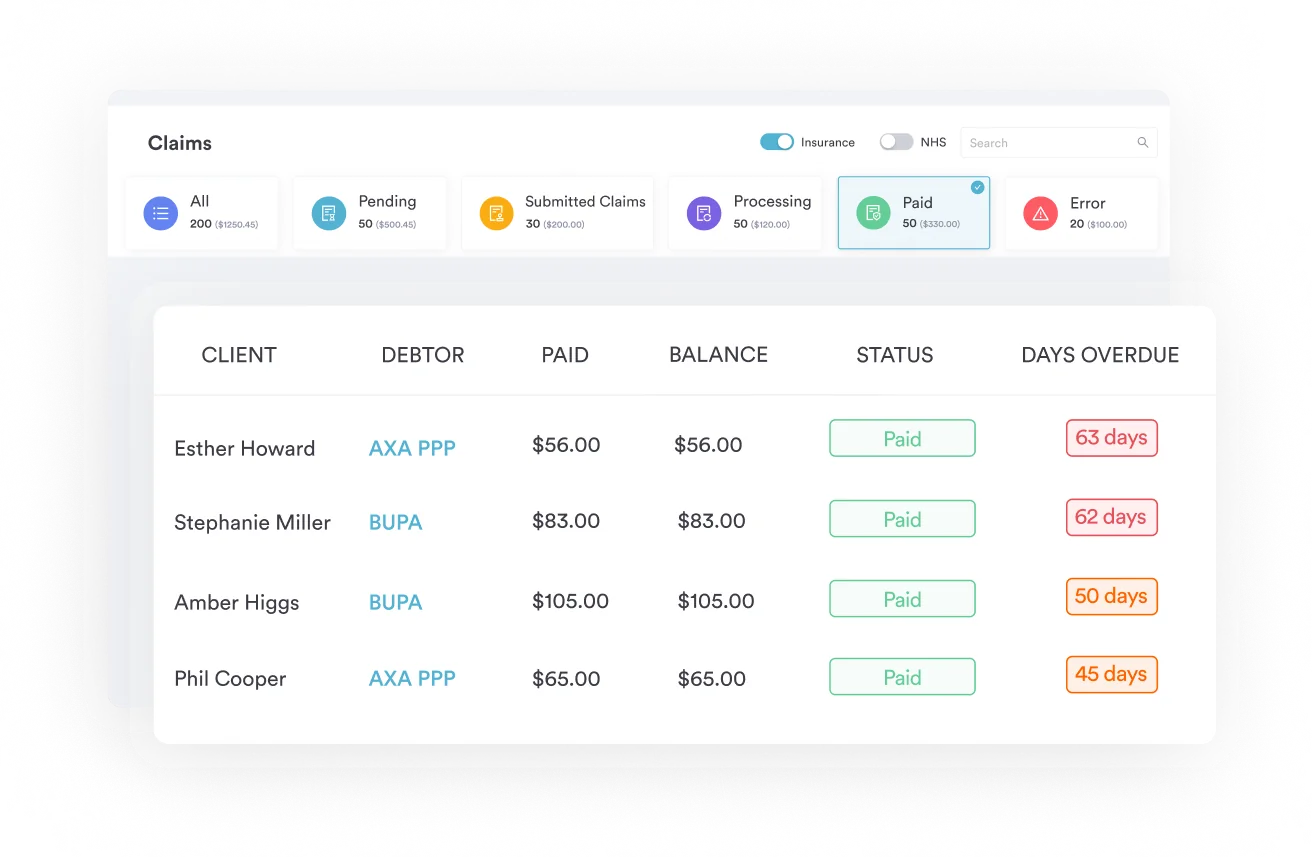
When an insurer queries the band count or the grade, the answer is already on the patient record. Your billing team stops digging through inboxes to defend a claim.

Pabau keeps your H5240 fee for each insurer, stores the operative note and consent on the patient record, and tracks every claim to payment.

H5240 is easy to pick once the note names the technique. Claims are lost in the details around it, such as a clashing code, a missing band count or an absent authorization.
Fix the operative note template first, so every banding record captures grade, band count and positions. Then check each claim against the insurer’s unacceptable list, because AXA Health alone names 12 codes.
Book a demo to see how Pabau keeps H5240 fees, notes and claim status on one patient record.

Treating with a sclerosant instead? CCSD code H5230 covers injection of sclerosing substance into haemorrhoids, an unacceptable combination with banding.
Did banding fail and the patient need surgery? CCSD code H5100 explains how to bill a haemorrhoidectomy on its own date of service.
Examining the rectum under anaesthetic first? CCSD code H4430 covers examination of the rectum under anaesthetic as a sole procedure.
Billing Bupa for colorectal procedures? Bupa CCSD codes guide walks through how Bupa organizes and pays CCSD-coded procedures.
Looking for another CCSD code? CCSD code guides lists every procedure code we cover, chapter by chapter.
Yes. Rubber band ligation is the clinical name for banding of haemorrhoids, which the CCSD schedule codes as H5240. The same code applies whichever band applicator the surgeon uses.
One H5240 normally covers every band placed in a session, because the descriptor is plural. Record the exact band count in the note, and confirm the billing unit with the insurer.
Not with the combined OGD and colonoscopy codes. AXA Health lists G8082 and G8083 as unacceptable with H5240. Check the patient’s insurer list before adding any other endoscopy code.
No. CCSD codes are used to bill UK private medical insurers. NHS hospitals record procedures with OPCS-4 codes instead.
Bill the later operation under its own code, such as H5100 for haemorrhoidectomy, on its own date of service. Never add it to the earlier H5240 claim.