Maja Popovska

canine dental chart
What is a canine dental chart? A canine dental chart is a dental record template...

Last Updated: Nov 11, 2026
Free PDF 1 page, print-ready Clinician-reviewed
Soap notes for acupuncture are structured clinical records that document each patient encounter across four sections: Subjective, Objective, Assessment, and Plan. Unlike generic SOAP formats, acupuncture-specific notes must capture Traditional Chinese Medicine (TCM) diagnostic data: tongue and pulse findings, pattern differentiation, point selection, and needling technique. Without these elements, the note fails both clinical and regulatory standards expected by licensing boards and insurers.
Many acupuncturists default to brief, inconsistent notes after treatments, particularly in busy clinic settings. That creates real exposure: missing tongue and pulse findings undermine TCM pattern credibility, absent point documentation weakens insurance billing, and vague assessments leave practitioners unable to defend clinical decisions if a complaint arises. This guide explains what to record in each SOAP section, includes a fully worked example, and offers a free downloadable template your team can use immediately.
A ready-to-use template covering subjective patient history, tongue and pulse diagnosis, TCM pattern assessment, point prescription, needling technique, adjunct therapies, safety flags, and follow-up scheduling.
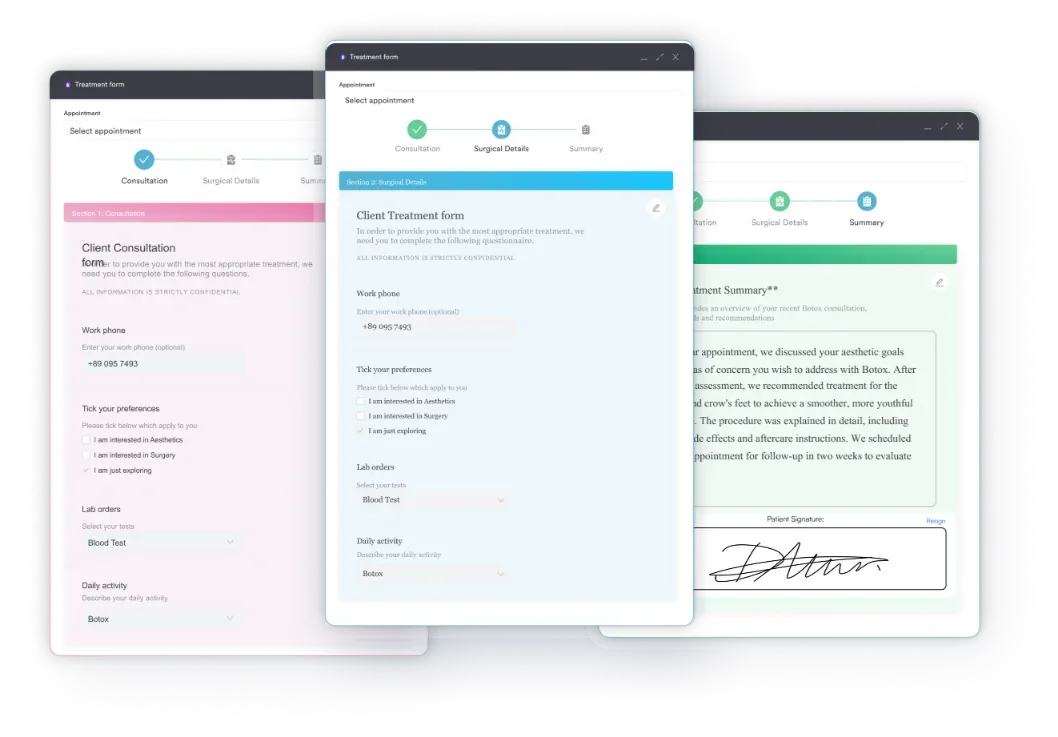
Start from scratch, or upload this PDF or any form you already use, and Pabau's AI Form rebuilds it with tick boxes, text fields and a signature. Attach it to the treatment once, and every patient gets it on time.
AI Form rebuilds the consent, history and aftercare forms you already use. You review each one, then publish.
Patients complete forms on their phone before they arrive, so the front desk stops retyping paper.
Every signed form is versioned and attached to the treatment record, ready when you need it.
Set how long a consent stays valid. Returning patients skip forms they have already signed.
Supports HIPAA and GDPR compliance AES-256 encryption 4.8 on G2 4.7 on Capterra Trusted by 4,000+ practices worldwide

SOAP notes for acupuncture must capture TCM-specific data: tongue body and coating, pulse quality per position, and pattern differentiation alongside standard clinical findings.
The Assessment section requires a named TCM pattern diagnosis (e.g. Liver Qi stagnation with Spleen deficiency) linked to the objective findings that support it.
Every Plan section should list specific acupoints with their locations, needling technique, retention time, any adjunct therapies, and documented safety flags such as pregnancy or anticoagulation use.
Pabau’s digital forms include an acupuncture SOAP template with built-in TCM fields, so practitioners record everything in one place and connect notes directly to billing.
A soap notes for acupuncture template is a structured clinical form that guides practitioners through the four SOAP sections while prompting for TCM-specific data not found in generic documentation frameworks. Standard SOAP notes were designed for biomedical settings. Acupuncture practice adds tongue diagnosis, pulse assessment across multiple positions, pattern differentiation, and point-specific needling records, all of which require dedicated fields to be documented consistently.
From a legal standpoint, acupuncture SOAP notes are clinical records subject to the same retention and confidentiality standards as any healthcare documentation. In the United States, covered entities must retain records for at least six years under HIPAA, though some state licensing boards set longer requirements. The National Certification Commission for Acupuncture and Oriental Medicine (NCCAOM) identifies comprehensive clinical documentation as a core practitioner competency. For Medicare patients receiving acupuncture for chronic low back pain, notes must justify medical necessity to satisfy CMS coverage criteria.
Using a purpose-built acupuncture template reduces the risk of missing required fields. Many practitioners also move from paper to digital intake forms that auto-populate patient details, cutting documentation time significantly while keeping records audit-ready.
Complete the template in five sequential steps, working through each SOAP section during or immediately after the treatment session. Same-session completion is best practice: Memory degrades quickly after back-to-back appointments, and some state licensing boards require notes to be finalised on the day of treatment.
The table below shows a fully completed acupuncture SOAP note for a patient presenting with chronic headaches and fatigue, documented as Liver Qi stagnation with underlying Spleen deficiency.
This template is designed for licensed acupuncturists and TCM practitioners working across a range of clinical settings. It suits solo practitioners, multi-disciplinary wellness clinics, and integrative medicine practices where acupuncture sits alongside other therapies.

Pabau includes customisable digital SOAP note templates with TCM-specific fields for tongue, pulse, and point selection, so your documentation stays consistent and connects directly to your billing workflow.

A structured template does more than organise information. It creates a defensible clinical record and builds consistency across a practice’s entire caseload.
Documentation errors in acupuncture practice follow predictable patterns. Knowing them makes them avoidable.
Acupuncture clinical records sit at the intersection of professional standards, state licensing requirements, and healthcare law. The CMS Medicare coverage policy for acupuncture (NCD 30.3.3) stipulates that documentation must demonstrate medical necessity for each billed session, and records must be available for audit at any time. For non-Medicare patients, documentation standards are set by state licensing boards, which typically require retention of between 7 and 10 years depending on jurisdiction.
The SOAP note methodology (StatPearls, NCBI) was developed for biomedical settings, but its structure applies directly to acupuncture when the Objective and Assessment sections are adapted to include TCM-specific clinical data. Research published through the National Center for Complementary and Integrative Health (NCCIH) consistently highlights the importance of standardised documentation in integrative medicine to support both clinical outcomes research and practitioner accountability.
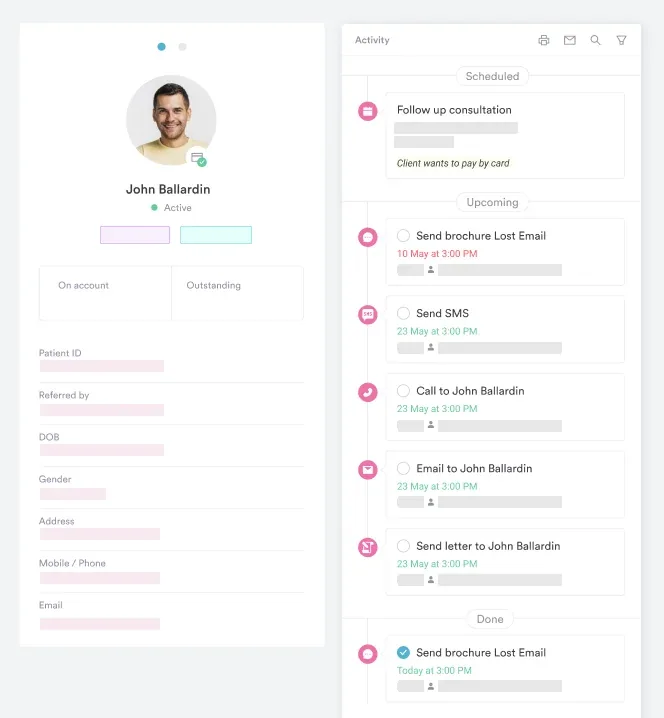
Clinics managing acupuncture records digitally benefit from centralised patient records that link SOAP notes to appointment history, billing, and consent forms. This removes the fragmentation common in paper-based practices and makes responding to audit requests straightforward.
Before each session, have the patient confirm whether any new medications, health changes, or contraindications have arisen since their last appointment. Record this in the Subjective section. It takes 30 seconds and prevents both clinical oversights and documentation gaps that cannot be corrected retrospectively.
Consistent, complete SOAP notes are the clinical foundation of a defensible acupuncture practice. Missing TCM-specific data creates billing denials, licensing risks, and continuity failures that undermine both care quality and professional reputation.
Pabau’s digital forms include acupuncture-specific SOAP templates with built-in fields for tongue and pulse findings, pattern diagnosis, and point prescription, connecting documentation directly to your billing workflow. To see how Pabau handles clinical notes for acupuncture and integrative medicine practices, book a demo.

Need a broader clinical notes framework? Safer clinical notes covers documentation best practices that reduce medico-legal risk across any clinical specialty.
Looking for a psychiatric documentation template? Psychiatric evaluation template provides a structured guide for comprehensive mental health assessments, useful for acupuncturists treating anxiety or stress-related presentations.
Managing a multi-modality integrative clinic? Integrative medicine software from Pabau supports acupuncture alongside other complementary and functional medicine disciplines in one practice management system.
Soap notes for acupuncture are structured clinical records covering four sections: Subjective (patient-reported symptoms and history), Objective (tongue, pulse, and palpation findings), Assessment (TCM pattern diagnosis), and Plan (points used, technique, adjunct therapies, and follow-up). Unlike generic SOAP formats, acupuncture versions include dedicated fields for tongue body and coating, pulse quality across bilateral positions, and point-specific needling data.
List each point by name and standard location code (e.g. ST36 Zusanli), then record needle gauge, insertion depth, technique (tonification, sedation, or even method), and retention time in minutes. If electro-acupuncture is used, document the frequency and intensity settings. This level of detail satisfies both licensing board requirements and insurance auditors reviewing CPT code documentation.
The assessment should name the primary TCM pattern in full (e.g. “Liver Qi stagnation with Spleen Qi deficiency”) and list the objective findings that support it, including tongue characteristics and pulse qualities per position. Where the patient also carries a biomedical diagnosis, include the corresponding ICD-10 code alongside the TCM pattern to meet insurance documentation requirements.
Requirements vary by jurisdiction. In the US, state acupuncture licensing boards set specific standards for record content, completion timing, and retention periods, typically 7-10 years. For Medicare patients, CMS requires documentation demonstrating medical necessity for each billed acupuncture session. HIPAA applies to any US practice handling protected health information, requiring minimum 6-year record retention for covered entities. Check your specific state board rules for local requirements.
Yes. Acupuncture practice management software can automate SOAP note writing through customisable templates with pre-built TCM fields, reducing the time needed to complete documentation after each session. AI-assisted dictation tools can convert a practitioner’s post-session voice summary into a structured draft note, which the practitioner reviews and signs before the record is finalised.